



Central enterprises post double-digit growth in revenue, profits









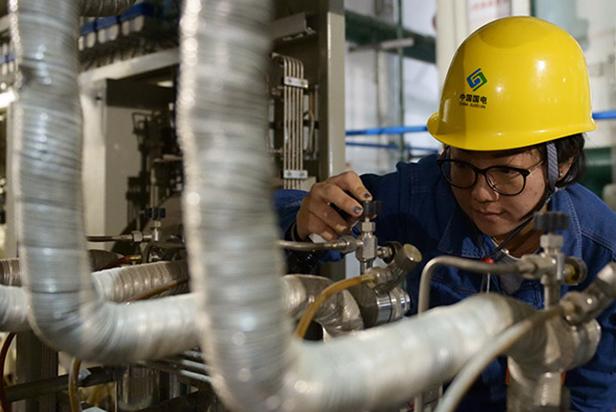
Central government-owned enterprises have recorded a double-digit growth in both their operating revenue and profits over the past year, with an increase of 13.3 percent and 15.2 percent respectively, People's Daily reported, citing figures released at a government meeting on Monday.
The growth rate of revenue came in a new high after five years, according to Beijing Business Today, which also analyzed that better-than-expected macro performance in economic growth, employment, commodity prices, and balance of international payments and macro-control measures contributed to the record increase.
As of 2017, the total asset of the central enterprises has reached 54.5 trillion yuan, said People's Daily.
Reforms of State-owned enterprises (SOEs) will go into deeper waters in 2018 as the government expects them to play a bigger role in leading excess capacity cuts, keeping the debt ratio under control and driving high-quality economic development.
Xiao Yaqing, head of the State-owned Assets Supervision and Administration Commission, or SASAC, said at the meeting that the country will coordinate with central enterprises that meet certain conditions this year to diversify shareholding structure at corporate level, and further promote mixed-ownership reform.
In 2017, China's pilot reforms in mixed-ownership have covered various areas, including electricity, petroleum, natural gas, civil aviation and telecom, and the project has brought in more than 40 different types of investors and absorbed capital of more than 90 billion yuan, said Xinhua.
Through mergers and acquisitions, the total number of central SOEs has fallen from 117 in 2012 to 98.
Li Jin, chief researcher at the China Enterprise Research Institute, told Beijing Business Today that in the new round of SOE restructuring, integration of the whole supply chain and alliance between giants become a trend, and strategic emerging industries tend to be an important part in the restructuring.
SOEs also aimed to achieve coal capacity cuts of 12.65 million tons in 2018, when industrial sectors involved in nonferrous metals, shipbuilding and construction materials will also work on reducing excess capacity.


















