


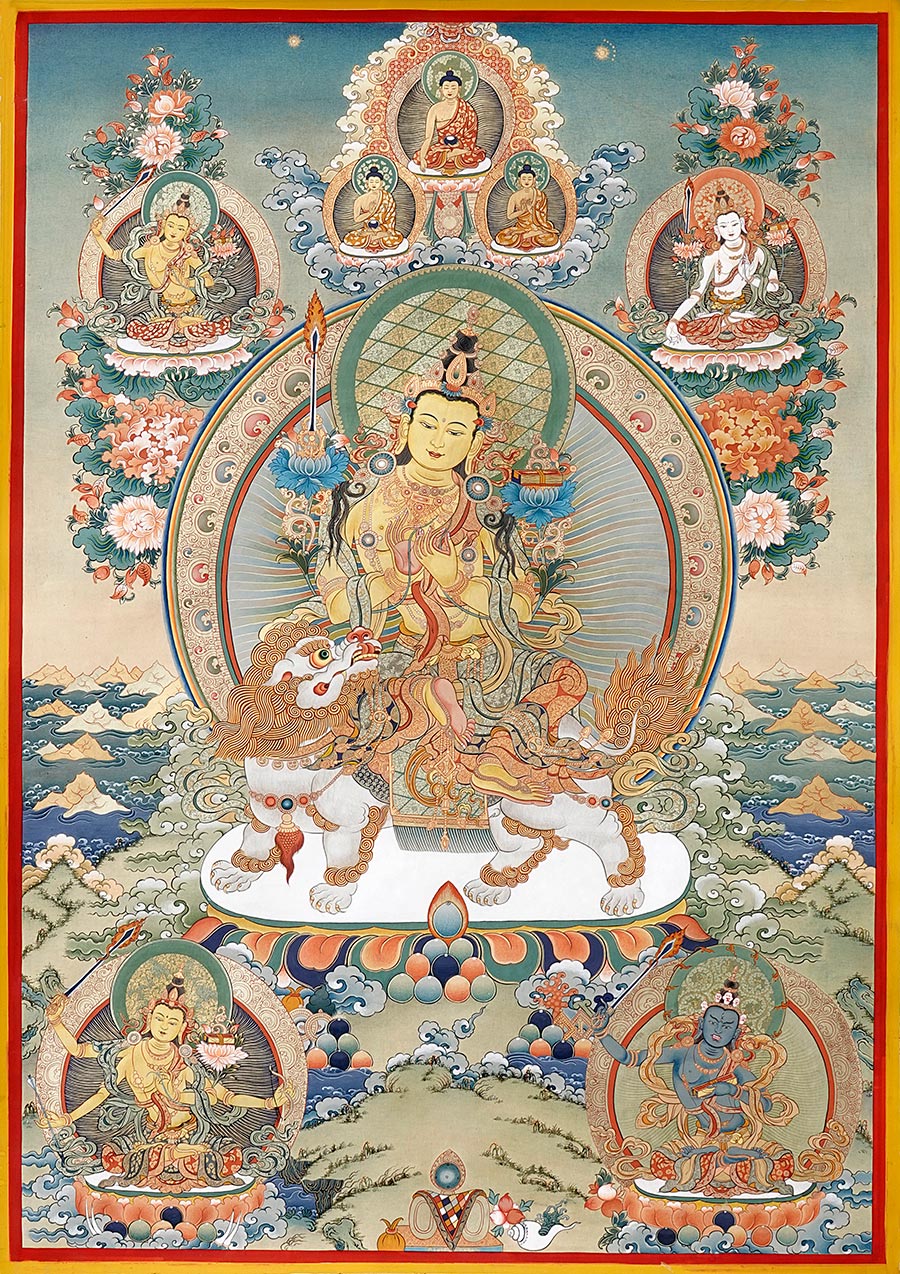
Referring to his early days as a thangka artist, Nyangbon says: "When I was young, I traveled extensively with my masters in Tibetan areas not only to learn thangka painting skills but also to find jobs. And the only place we could land painting jobs then were monasteries.
"There was no market for our art then, and few people outside knew about thangka."
As a result, he says, painters then had either to do farm work to support themselves or simply stopped painting.
"But now painters work at home, and orders come from across the country."
Shaurjo, 52, whose works are also on show at the exhibition, says although the lives of thangka painters are better now, it still takes years of diligent work to be a good artist.
Shaurjo, also a State-level expert like Nyangbon in Regong art, says artists still follow the five-year master-apprentice system where apprentices study, live and work with their masters.
He adds that if an apprentice can persist with the art for three years he is deemed to be a thangka artist.
He says to ensure that the aspirants complete their apprenticeship, masters should treat their students just like a father looking after his children.





