
国产人人色I色婷婷综合久久中文字幕雪峰I奇米色777欧美一区二区I久热久热aV爽青青在线I国产av喷水I国产伦精品一区二区三区免.费I高潮av在线Iww欧美一级I91天天看I黄a在线91I九一无码中文字幕久久无码色…I丰满国产精品视频二区

Culture Insider: Admission letters in ancient China

By Bi Nan | chinadaily.com.cn | Updated: 2018-08-09 10:18
Share
Share - WeChat
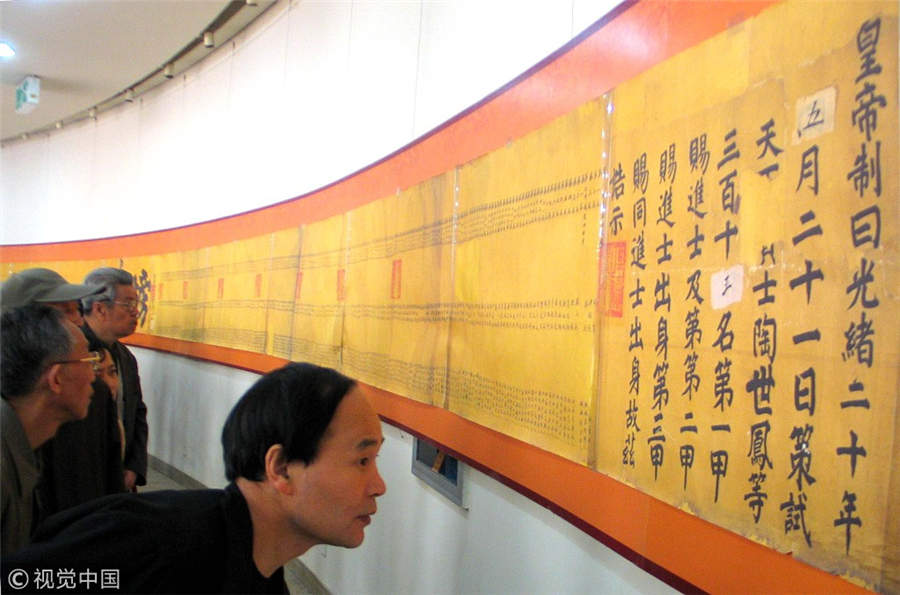
A list of the successful candidates from the dianshi in 1894, the 20th year of the reign of Qing Emperor Guangxu, is on display at Shaanxi Province Art Museum, April 18, 2006. [Photo/VCG]

What was written on an admission letter?

The ancient admission letter was always written in clerical script (lishu), an archaic style of Chinese calligraphy. The center of the letter showed the examinee's ranking as well as the year and name of the exam.

During the Tang and Song dynasties, the jinhua tiezi would first list the names, titles and personal information of the main officials in charge of the exam and then the name of the examinee.

The jiebao in the Ming and Qing dynasties had simpler content, which just contained the name and ranking of the examinee.

The ancient admission letters also had to be stamped with special seals after being written. In the Qing Dynasty, the list of successful candidates during the dianshi, the top-level exam in keju, would be sealed by the emperor and shown to the public.


|<< Previous 1 2 3 4 5 6 Next   >>|

Related Stories

Top
BACK TO THE TOP
English
Copyright 1994 - . All rights reserved. The content (including but not limited to text, photo, multimedia information, etc) published in this site belongs to China Daily Information Co (CDIC). Without written authorization from CDIC, such content shall not be republished or used in any form. Note: Browsers with 1024*768 or higher resolution are suggested for this site.
License for publishing multimedia online 0108263

Registration Number: 130349
FOLLOW US