


Nanjing retains its history, charm in modern era









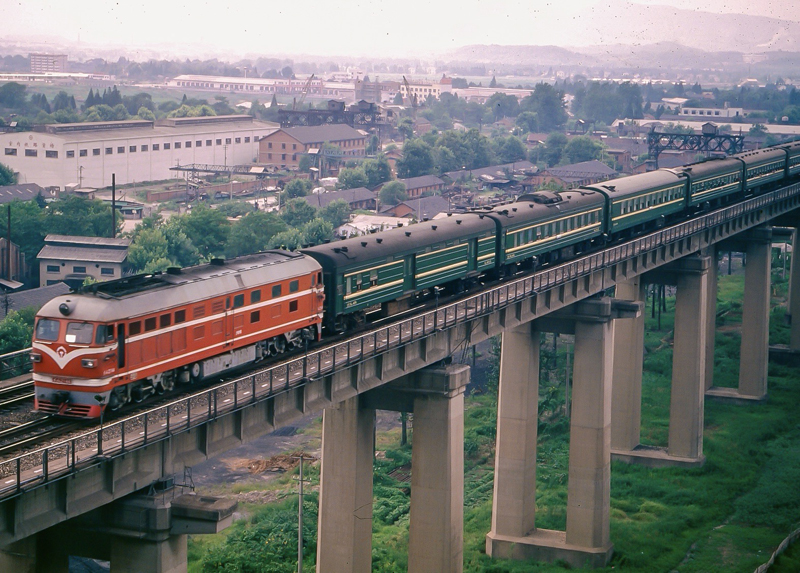
Jiangsu is an area of agricultural abundance known as the "land of fish and rice". Moving through by train in 1996, I felt I was looking on a scene resembling a tapestry where white-walled farm buildings rose amidst green, yellow and blue. It was a landscape of water transportation, where laden barges wound along a maze of rivers and waterways culminating in the Grand Canal. It appeared obvious even then how urbanization was spreading out from Shanghai, particularly along the southern sections of the Yangtze River. Jiangsu was on an upward development curve. This was something I again witnessed visiting the lovely city of Zhangjiagang earlier this year.
In August 1996, I was relaxing in Suzhou after several weeks' hard travel. Knowing I would soon have to return to Beijing and fly back to Scotland it was tempting to spend my remaining days in Suzhou. However, the more I looked at my maps, the more I was drawn to Nanjing. It was a city reflecting much of China's story, and I could take a train from there back to Beijing.
After saying goodbye to friendships I had formed in Suzhou, Nanjing was a relatively short journey. Within moments of arriving I realized why, along with Chongqing and Wuhan, it is called one of the "three furnaces" of China. Despite the heat and humidity, I soon wished I had more time. Over my few days there I quickly formed an affection for a city that had twice been China's "Southern Capital". It assumed this role from 1368 to 1421 during the Ming Dynasty, and in the early 20th century. It was during the Ming Dynasty a grand palace and its famed city walls were constructed.
Zhongshan Road is a prominent north-south street within the central city. From the Xinjiekou traffic circle rises a statue of Sun Yat-sen. He was born close to Guangdong's Zhongshan city on 12 November 1866, and is regarded as the "father of modern China" for his role in ending the imperial Qing dynasty. Sun's body was brought by train to Nanjing in 1929, to be placed in a specially built mausoleum.