


Chen asked the army not to take civilian houses as accommodation. Old photos, as well as memoirs show that during the first days PLA soldiers reached the city, they slept and ate on the streets, dressed in uniform.
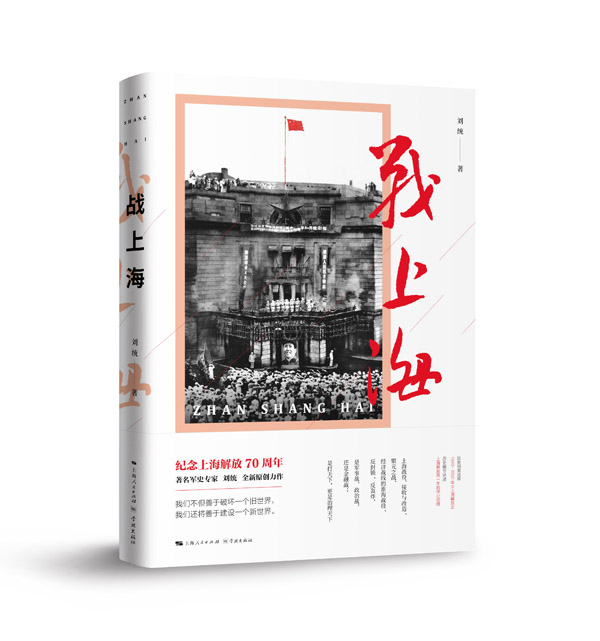
Liu Tong, a professor at Shanghai Jiao Tong University and a military writer who focuses on history and famous battles, has written a book that offers an insight into how the city was run by the Party from May 1949 to May 1950.
With some 100 photos, maps and operational plans, Battles in Shanghai (Zhan Shanghai) features not only the historic military campaign, but a more panoramic account of how the economy and social order were restored, and how threats from Kuomintang were dispelled. A movie of the same title was released in 1959 to record the military triumph.
Liu is looking at the overall picture in his book, he says.
"I planned the book as a tribute to the 70th anniversary of the establishment of New China as well as the liberation of Shanghai," Liu says.
But because he was "puzzled by multiple threads when doing research for the book", he says he tried to arrange the material from Chen's perspective, asking "what are the things needed to be tackled and defeated one by one?"
Liu says what Chen faced was a city paralyzed by war, where the treasury was empty and millions were waiting to be fed.
At the time the international community was doubtful about what the Party could achieve for Shanghai, which was a new challenge and one far different from its previous tasks.
Liu retrieved many historical records and quotes freely from them in the book, "because the original words best show how the Party adapted to city life swiftly and presented solutions to surging problems in a timely manner".
His admiration for the Party grew as he proceeded with the book, Liu says.
"They were thorough and austere, well-organized and well-disciplined, and kept a warm heart to serve the people, which is a precious spiritual asset of the country.
"They were good at correcting errors and learning from past experiences," he adds.





