


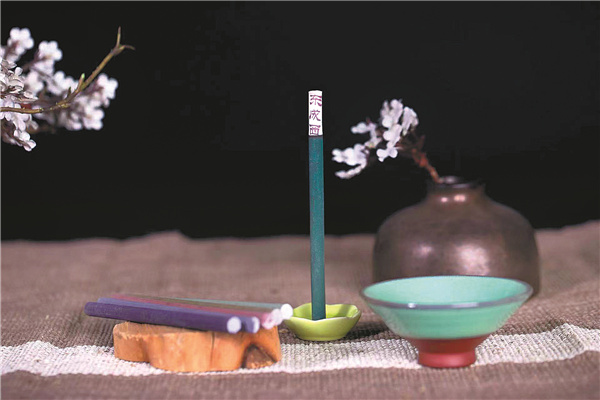
It found wider popularity during the Ming (1368-1644) and Qing (1644-1911) dynasties when it was used to fend off disease, insects, mosquitoes and preserve people's health.
Since the Han Dynasty (206 BC-AD 220), incense has left its traces in the neighboring area of Qingyuan, when an incense burner was unearthed from the tomb of a Han prince, Liu Sheng, to the west of the district in 1968.
Qingyuan saw many incense workshops set up during the Song Dynasty, thanks to its close geographical location to abundant herbal resources hidden in the Taihang Mountains.
Yang's family incense business built its name in the region in the 1940s. It was halted for a while but it returned in the '80s, shortly after the country's implementation of the reform and opening-up policy.
"I felt the opportunity had finally come," he says.
Therefore, Yang got down to setting up his own incense business.
He went out of his way to inquire after, and purchase, incense production equipment and raw materials while visiting senior incense masters, from whom he gleaned valuable information. He also made his way to libraries in Beijing to study incense monographs.
When all the resources were ready, Yang experimented over and again before restoring and upgrading ancient incense recipes.





