



China marks key step in trailblazing expeditions to Moon









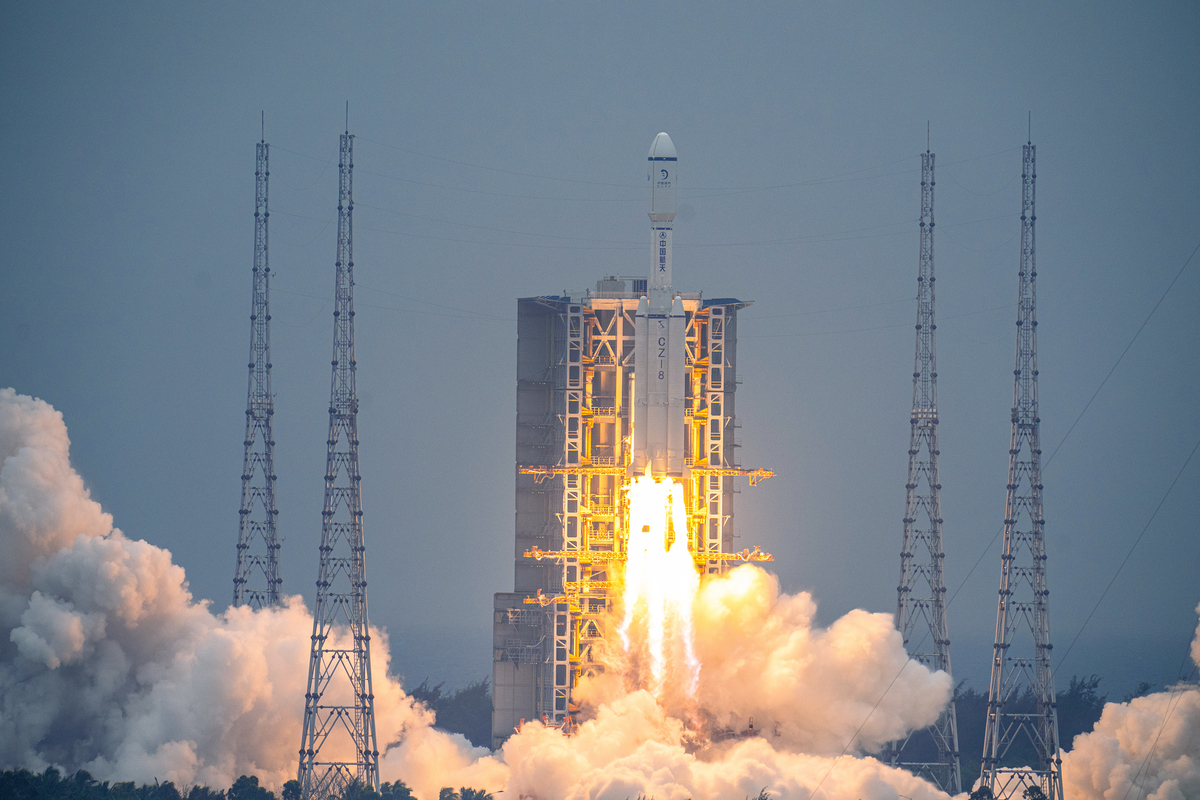
China launched a relay satellite on Wednesday morning to lunar orbit to pave the way for the space power's prospective trailblazing expeditions to the Moon.
The Queqiao 2, or Magpie Bridge 2, satellite was lifted atop a Long March 8 carrier rocket that blasted off at 8:31 am from a coastal launch pad at the Wenchang Space Launch Center in China's southernmost island province of Hainan.
After a 24-minute flight, the satellite was released from the rocket and then entered into a lunar transfer trajectory. At the same time, the solar wings and communication antennas smoothly unfolded.
The completion of the maneuvers marked the launch mission's success and the Queqiao 2 has started its journey toward the moon, according to Ge Ping, one of senior officials at the China National Space Administration who oversee the lunar program.
"The launch took place on time and the satellite entered its trajectory with good accuracy, laying a solid foundation for its coming operations," he said.
In the next few days, the spacecraft is scheduled to carry out a series of maneuvers such as a mid-course trajectory correction and a braking operation before it enters an elliptical frozen orbit around the moon to become the second relay satellite above the silver celestial body.
After its arrival in the predetermined orbital position, Queqiao 2 will conduct two-way communication tests with the Chang'e 4 probe that is on the lunar surface and the Chang'e 6, which is waiting for launch at the Wenchang center, to examine its performance, according to Ge.





- Space schedule opens with two launches
- Winter cherry blossoms create unexpected spectacles
- Chongqing park becomes stage for captivating natural phenomenon
- Chongqing's cat theme park draws visitors, aids rescues
- Winter fishing season brings fresh catches at Hunan's Liuye Lake
- Former Guizhou official gets 11-year sentence for bribery