Taiwan and mainland united by goddess Mazu, common ancestral roots









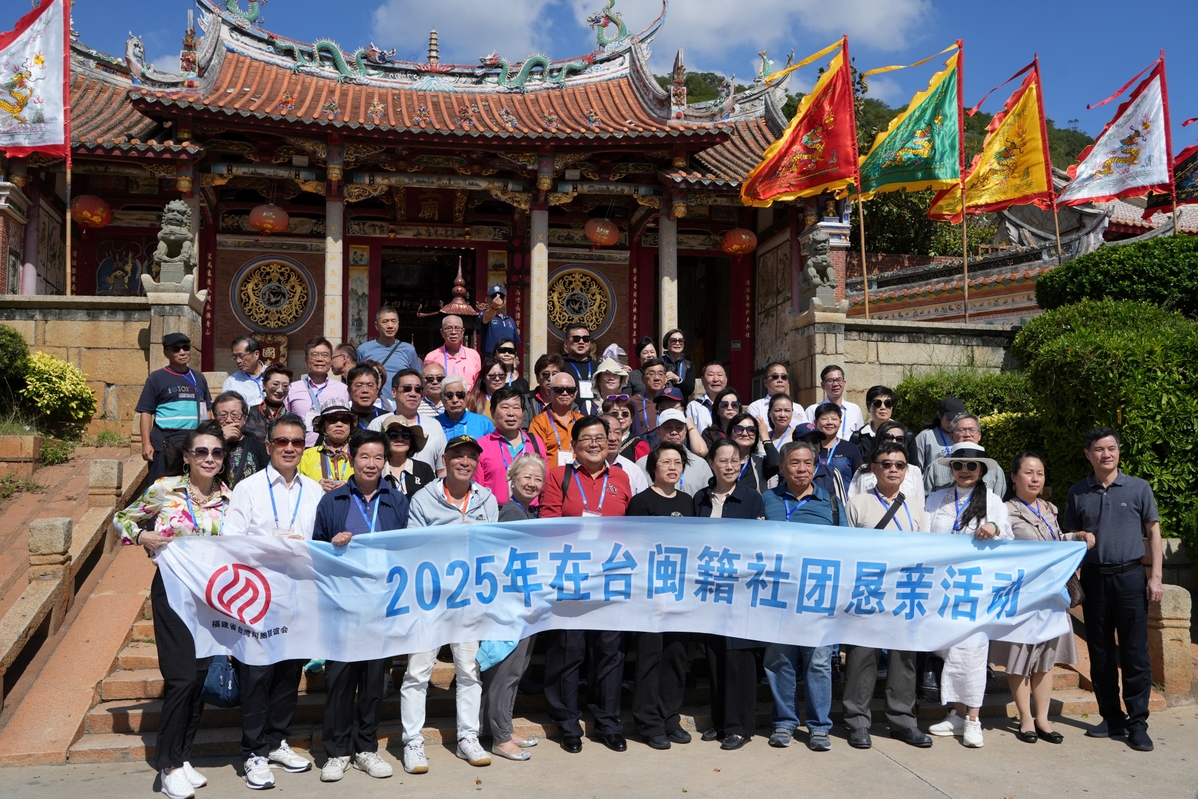
From the shared belief in Mazu to the common ancestral roots on the mainland, Taiwan compatriots tracing their lineage to Fujian province said that people on both sides of the Taiwan Strait are one family and call for closer cross-Strait exchanges.
Fujian province on the eastern Chinese mainland, separated from Taiwan by only a narrow strait, is the closest mainland province to the island. About 80 percent of Taiwan compatriots could trace their ancestry to Fujian.
"We speak the same dialect and worship the same goddess, which shows that we share the same roots and are one family," said Lin Ming-cong, head of the association of relatives of patriots in Taiwan who fought against Japanese occupation. Lin's family, originally from Pinghe county in Zhangzhou, Fujian province, crossed the Strait to Taiwan during the Qing Dynasty (1644-1911) and later flourished there.
In Taiwan, a number of groups have been established to bring together people who identify themselves as descendants of Fujian, offering mutual support and fostering connections among so-called clan relatives in both Taiwan and the mainland.

- Mainland refuses to renounce force in its pursuit of reunification with Taiwan
- Between wetlands and worlds: The story of a Bangladeshi student in China
- China's 5G base stations top 4.83 million by end of 2025
- Peaceful reunification to offer socio-economic benefits for Taiwan
- China records success in reversing ecosystem degradation
- Immigration bodies investigated nearly 19,000 criminal cases in 2025