Sustainability foams over competition
Second-place winner of barista championship proves the Chinese mainland is a strong contender for bringing innovation in coffee cultivation, Li Yingxue reports.









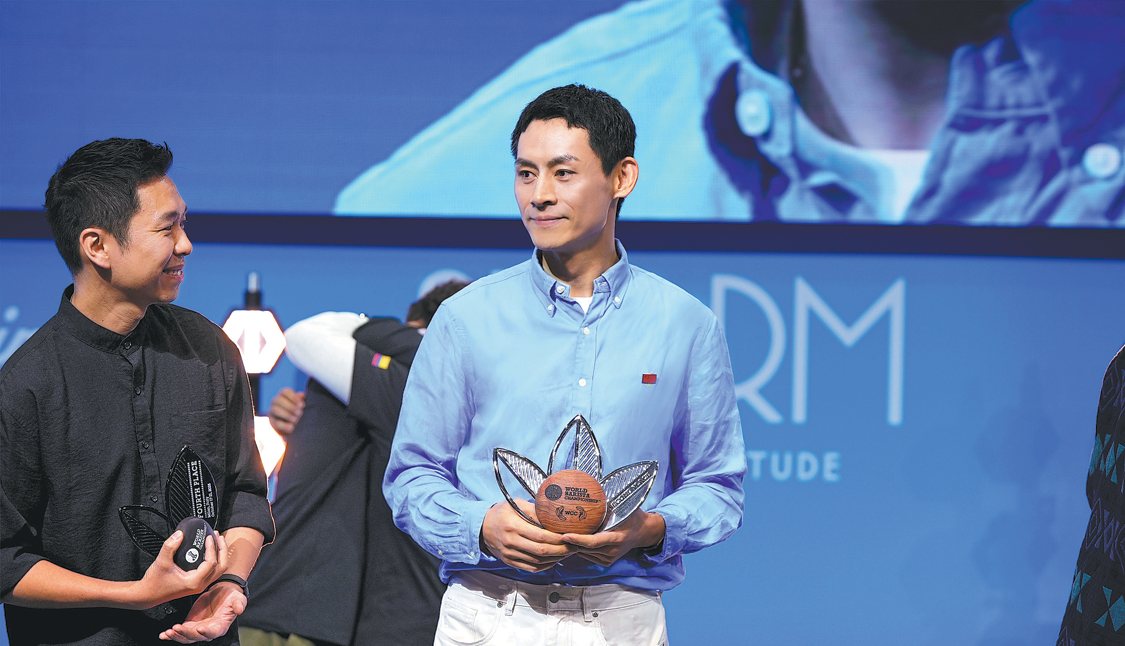
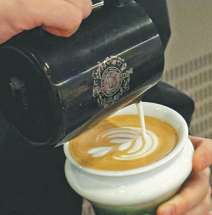
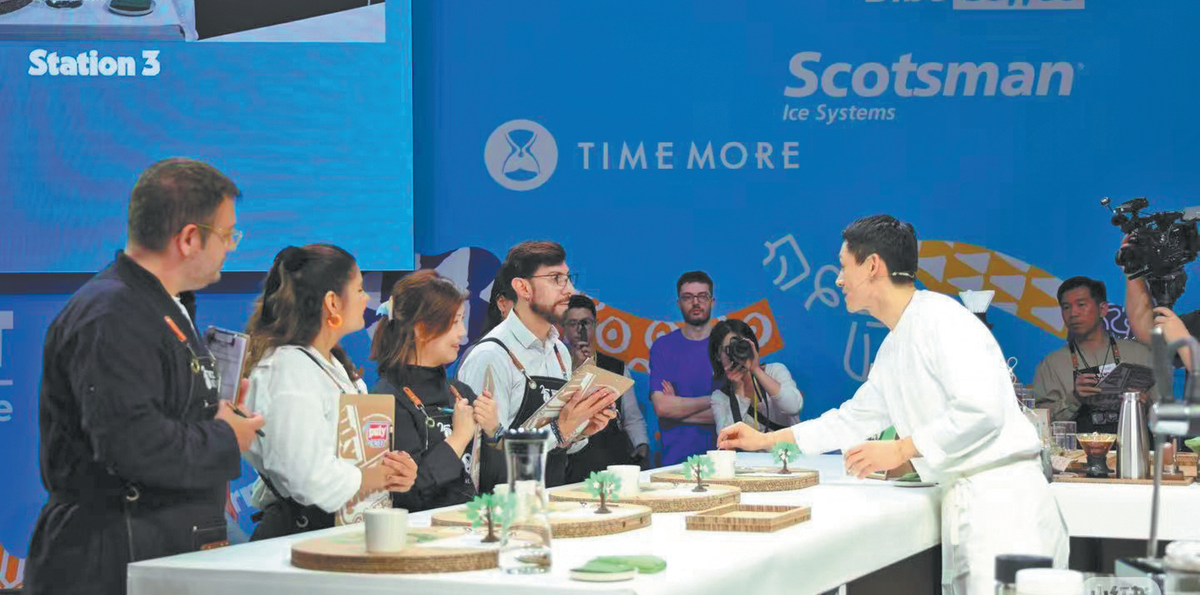
Given just 15 minutes, a World Barista Championship competitor must prepare 12 coffees — four espressos, four milk-based beverages, and four espresso-based signature drinks — while simultaneously explaining the roasting parameters, brewing variables, and how their chosen theme connects to flavor.
Often described as the "Olympics of coffee competitions", the WBC is among the most demanding events in the global specialty coffee industry.
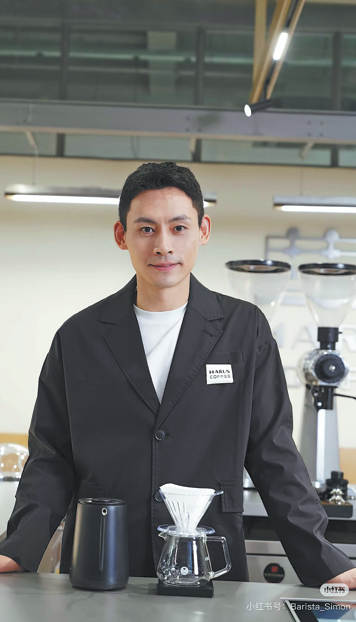
Before 2025, no barista from the Chinese mainland had advanced to the final round. That changed in Milan, Italy, when Sun Lei, a barista from Suzhou, Jiangsu province, reached the finals, ultimately winning second place.
His presentation, themed the "Eco Friends Project", showcased a low-carbon, sustainability-driven philosophy that impressed judges as a cohesive system linking farming, processing, roasting, extraction, and consumption. Behind the compelling presentation lay many years of dedication and hard work, applying scientific methods to reduce costs and enhance efficiency while framing coffee as both rational and human.
By integrating sustainable practices at every step, from innovative farming and eco-friendly processing to low-carbon milk and the transformation of by-products into new flavors, Sun demonstrated how precision and responsibility can coexist with warmth and care. His achievement reflects the steady progress of Chinese baristas and the broader development of China's coffee industry, inspiring more young baristas to step onto the global stage.
"Aside from the practice and validation of this competition, what excites me most is not just achieving second place in the world, but witnessing the growth and evolution I've experienced through years of competing in the WBC," says the 39-year-old barista. "My team and I have been steadily improving, gradually moving closer to the world's top tier and competing head-on with the strongest contenders. With this foundation, we will bring more innovative and leading concepts into future competitions."
Having worked in the coffee industry for over a decade, Sun acknowledges that Chinese competitors still face gaps compared with top international baristas who have more experience and more substantial resources. Even so, he hopes to support others by sharing what he has learned.
"In the future, I plan to invite more professional peers and mentors, and collaborate with professional organizations and coffee brands to share more of our competition-related experiences," he says.
He also plans to develop courses covering theoretical knowledge, extraction techniques, espresso sensory training, and more, while turning some innovative competition equipment into consumer products for everyday use.
A low-carbon space
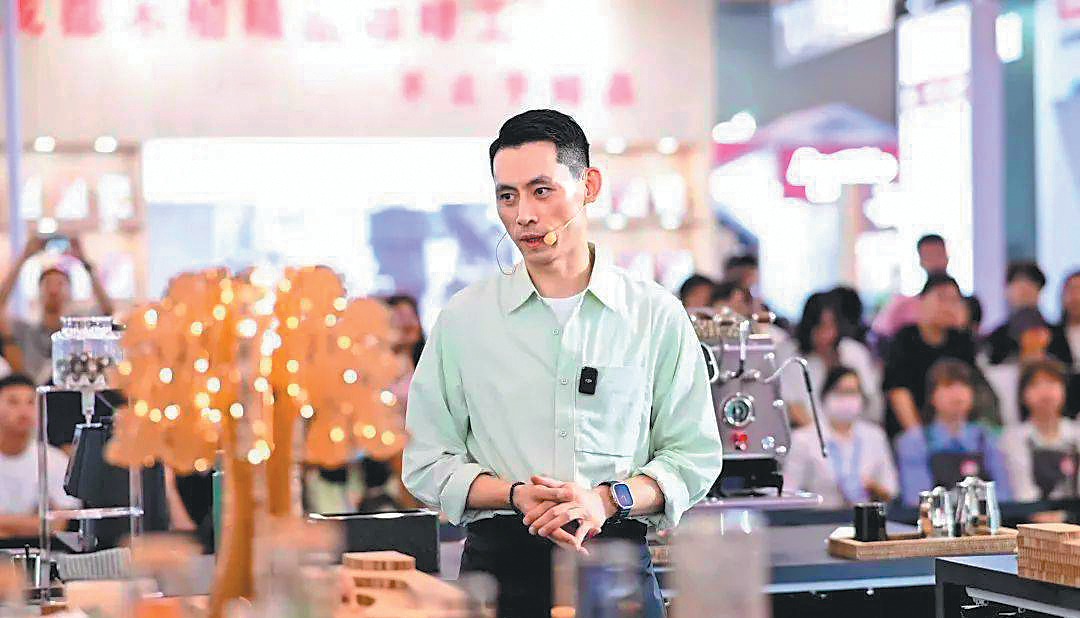
During the competition, Sun, founder of Marus Coffee, designed his presentation stage as a low-carbon themed coffee space resembling a retail cafe. Sustainability was embedded throughout, from trays and cups to beans, milk, equipment, and extraction methods.
Every step followed the Eco Friends circular system: innovative farming, eco-friendly processing, low-carbon milk, and the transformation of by-products into new flavors, ultimately reconnecting with consumers. One example was the menu, made from the silver skin of coffee beans.
"At its core, the Eco Friends Project connects producers around the world through low-carbon practices, building a shared vision for the future," Sun says.
He selected two coffees for the competition: Panama Geisha for the espresso and signature drink, and Colombia Pink Bourbon for the milk beverage. Behind both beans is a focus on sustainable cultivation. At Flying Pumas in Panama, producers use biochar, converting pruned branches and discarded plant matter into organic charcoal to enrich the soil.
When Colombia introduced this method to Panama, it altered the terroir: soil organic matter increased by 6 percent, and the pH level rose from 5.2 to 6.2. These characteristics translated directly to Sun's espresso, where judges detected stone fruit notes.
"This zero-emission innovation reduced carbon by 61 metric tons in 2022 and continues to reduce more each year," Sun says."Even the smallest actions can have a lasting impact on coffee."
Sun's focus on sustainability extends to processing. In Panama, Sun and the Flying Pumas team developed a low-impact process: coffee cherries sealed in bags were soaked in flowing spring water at 14 degrees Celsius for 16 days, then slowly dried over 26 days.
This careful process enriches the coffee with delicate flavor compounds, such as white florals and nectarine notes, while producing no wastewater and supporting the local environment. These subtle flavors became a highlight of Sun's presentation, demonstrating how environmentally conscious practices enhance both taste and storytelling on the competition stage.
Even the roasting process reflects Sun's sustainability philosophy. Sun uses a Loring hot-air roaster, which expands the beans for easier extraction. An eight-minute light roast transforms acidity into fruit-forward flavors while using energy efficiently to reduce emissions.
This approach allows him to demonstrate that environmentally conscious methods can be seamlessly integrated into every step of coffee preparation.
Long before Milan
Such meticulous attention to detail was the culmination of years of preparation. Sun's journey to the WBC finals began long before Milan: He first won China's national title in 2019, made his world debut in 2022, and, after reclaiming the national championship in 2023, returned to the WBC to represent China with greater experience, insight, and confidence.
Looking back, Sun says he was pleased to showcase his understanding of coffee chemistry and ultrasonic technology, but post-competition reflection led him to rethink his approach. He realized that coffee competition is not just about chemical results — it must balance science, innovation, culture, and experience.
In Milan, after two days of preliminary rounds and a tense semi-final, six competitors advanced to the final. When Sun's name was announced, it marked a historic moment for him and his team.
Sun's mentor, Jiang Feng, recalls: "Sun's name was the last one called. We all cried. For many years, baristas from the Chinese mainland repeatedly attempted to reach the final round and fell short. After each competition, we asked how we could earn the top global honor. This year (in 2025), we finally did it."
Jiang describes Sun's presentation style as calm and rational, but in the final round, Sun infused his performance with emotion drawn from years of preparation. That sincerity resonated with the judges.
"After every round, we reviewed our performance the same day and prepared for the next. Since no barista from the mainland had reached the finals before, we were learning step by step," Jiang says.
Preparation was exhausting. Everything from beans and milk to grinders and cups required careful selection and testing. Sun was supported by a dedicated team throughout.
Sun and Jiang have worked together since 2019. Over time, Sun learned to integrate complex coffee concepts into everyday language. "At first, he relied heavily on technical explanations that ordinary consumers might not understand," Jiang says."Gradually, he learned to explain complexity through daily experiences, which made it more accessible. Judges, after all, are also a special kind of consumer."
One of the most challenging aspects was developing the optimal roasting curve and determining the correct espresso resting period. Sun and Jiang considered hiring foreign coaches or roasters with more international experience, but ultimately relied on their team. In July, they began conducting extensive testing on roast profiles and resting periods, selecting what they believed was an exceptional espresso for Milan.
Behind the final 15-minute performance were countless hours of repetition. "Each run-through must maintain emotional intensity. Some days, Sun practiced 10 times," Jiang says.
Jiang observes that Chinese baristas have made rapid progress internationally in recent years, winning world titles in brewing competitions and achieving top results in latte art and roasting. "These achievements are also the result of baristas supporting one another," he says. "Competition results show that the global coffee stage is recognizing Chinese baristas, which is inseparable from the overall improvement of the country's coffee industry."
Competitions are not only technical contests but also platforms for international exchange, where top baristas' interactions generate new ideas for the global coffee industry. Jiang is confident that more Chinese baristas will achieve strong global results in the years to come.
Promoting a project
Sun says the Eco Friends Project originated from customer feedback at his Marus Coffee shops. He noticed many cafes used large amounts of coffee while extracting inefficiently, resulting in significant waste. High-quality beans were losing too much extractable material.
Initially, he promoted more efficient extraction through adjustments to grinding and brewing. As his understanding deepened, he connected these ideas to sustainability across the entire coffee industry.
He launched the Eco Friends Project in 2023. His 2025 WBC presentation represented three years of reflection and practice, shared with a global audience. The project has since extended beyond competition.
Over the past three years, Sun and his team have brought the project to more than 20 cities across China, with hopes for further expansion.
"My wish is for everyone to become an Eco Friend — protecting coffee's future and uncovering new flavors," he says.
Today's Top News
- Trade-in subsidy aims to drive more consumption
- Cooperation can boost cross-Strait integration
- State-owned firms register stable performance
- Global experts hail Xi's people-centered message
- Trips promote equality and coexistence
- Tech crucial factor shaping China-US ties