


Boosting domestic demand tops policy agenda









China's top economic meeting has put "prioritizing domestic demand and building a strong national market" at the top of the 2026 policy agenda, underscoring the centrality of boosting internal demand to stabilize growth, experts said.
Wei Qijia, director and researcher at the Industrial Economy Research Office of the Economic Forecasting Department under the National Information Center, said the emphasis of the annual Central Economic Work Conference in December reflects the pressing need to expand effective demand, especially domestic demand.
The meeting's task design is clear and focused, with both systemic and comprehensive features, signaling a steady shift in demand expansion measures, Wei said.
The push to expand domestic demand is closely linked to the building of a unified national market, experts said, adding that a strong domestic market requires solid support from internal demand.
Sun Jingyu, a professor at Nankai University's School of Economics, said the priority placement highlights the strategic underpinning role of a strong domestic market for Chinese modernization. The focus, he said, is on strengthening domestic circulation to offset uncertainties in external circulation, laying a strategic foundation to drive high-quality development during the 15th Five-Year Plan (2026-30) period and to gain the initiative amid intense global competition.
Data from the National Bureau of Statistics show that domestic demand has continued to grow since 2025 and has played a leading role in driving the economy. In the first three quarters, domestic demand contributed 71 percent to economic growth. At the same time, the imbalance of "strong supply and weak demand" remains prominent.
On the supply side, industry maintained robust growth and services rebounded markedly. In the first three quarters, industrial value-added rose 6.2 percent year-on-year and value-added services grew 5.4 percent, both outpacing GDP growth of 5.2 percent during the period.
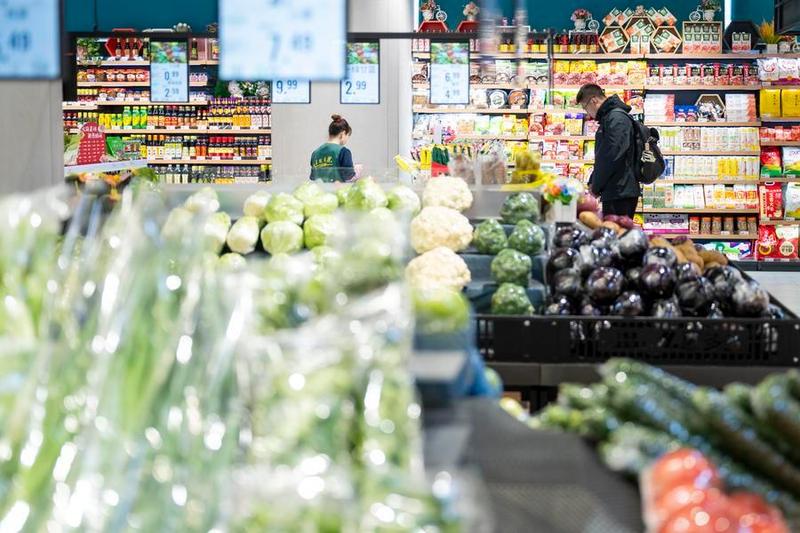
On the demand side, growth in retail sales of consumer goods and fixed-asset investment lagged GDP growth. Boosted by "trade-in" policies, retail sales growth reached 5 percent in the first half, then eased to 3.4 percent in the third quarter, and slipped to 2.9 percent and 1.3 percent in October and November, respectively.
Sun said the economy still faces structural tensions marked by "strong supply and weak demand", with excess low-end supply and insufficient high-quality supply preventing efficient alignment between production and distribution.
He said the meeting outlined a policy package that balances near-term and long-term goals: in the near term, removing unreasonable restrictions in consumption, launching targeted consumption-boosting programs, and formulating and implementing plans to raise urban and rural incomes to unlock consumption potential; over the longer term, optimizing "two new" policies by guiding consumption upgrades via consumer goods trade-ins while phasing out high-energy consumption equipment and promoting green, smart upgrades to enhance the match between supply and demand.
Wang Yiming, vice-chairman of the China Center for International Economic Exchanges, agreed, saying insufficient domestic demand is a salient challenge and requires sustained efforts to expand internal demand with stronger measures to boost consumption, stabilize investment and underpin the domestic demand base.
China is shifting from a consumption pattern dominated by goods to one where goods and services are equally important, Wang said. While growth in some goods consumption segments is slowing, demand for services such as healthcare, eldercare, culture and tourism, and childcare remains strong.
He said the priority should move from goods consumption to services consumption, with steps to relax market entry, rationalize service pricing, attract more private capital, and develop high-quality products and services in more niche fields to meet diversified demand among middle and high-income groups.
Consumption and investment are interconnected and mutually reinforcing, Wang said.