Wake-up call for Europe to review its dependency: China Daily editorial









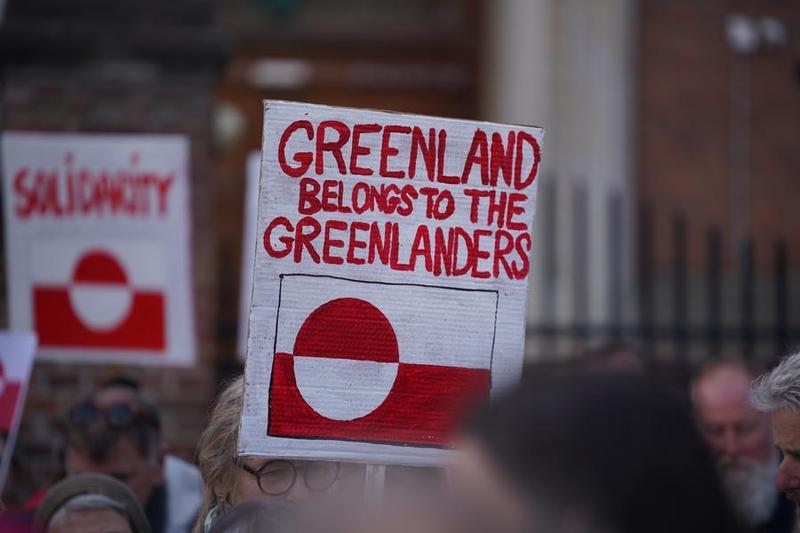
Tensions between the United States and its European allies over Greenland are escalating, with US President Donald Trump threatening on Saturday to impose a 10 percent tariff starting Feb 1 on eight European countries that have opposed to his takeover plan for the Danish island.
In response, European Union leaders are mulling a package of tariffs on 93 billion euros ($107.7 billion) of imports from the US as part of possible retaliatory measures. The aggressive land-grab bid of the US administration is a stark reminder of the long-standing power imbalance within transatlantic relations.
At the heart of this dispute lies a fundamental principle of international law: respect for sovereignty and territorial integrity. There is no doubt that the US' tariff threats, ostensibly aimed at coercing European acquiescence to its territorial ambitions, undermine this principle. Europe's united front in defense of Danish sovereignty over Greenland — if the united front holds — is a testament to its commitment to the principle.
European leaders should be clear that being an ally of the US is meaningless in the calculus of "America First". By signaling its readiness to impose retaliatory measures, including tariffs and market bans, the European Union is signaling belated assertiveness in response to the coercive tactics of the US.
The situation underscores the necessity for Europe to review the nature of transatlantic relations and reduce its reliance on the US as a pillar of support for its security. The notion that US interests inherently align with European stability has been challenged repeatedly, from trade disputes to differing stances on climate change and security. Europe's status as the largest market for US exports, valued at over $500 billion annually, should empower European leaders to negotiate from a position of strength rather than subservience.
As it navigates this complex situation, Europe must do so with a clear understanding of its interests and the role it wishes to play on the world stage.
The current crisis presents an opportunity for Europe to reassess its relationship with the US based on mutual respect and on an equal footing. The latest dispute over Greenland is indicative that Europe's interests are not necessarily aligned with those of the US.
US Treasury Secretary Scott Bessent's remarks on Sunday about European "weakness" and the necessity of US control over Greenland for "global stability" reflect the condescending view that the US holds toward Europe. This should serve as a wake-up call for those in Europe still intent on toeing the US line on issues ranging from security to the economy and trade. Such statements not only insult European capabilities but also ignore the continent's potential to act as a powerful, independent player on the world stage.
European countries should reflect on their foreign policy and economic development strategies over the years to understand why Europe finds itself in such an awkward position.
If protecting the "security" of other countries can be used as a pretext for the US administration to openly seize the territory of other nations, then what essential difference is there between this aggressive form of US security protection and the so-called "substantial aggression and security threats" that it claims to be helping European countries defend against?
The current frictions over Greenland serve as a crucial inflection point for Europe. It is a clarion call for the continent to bolster its strategic autonomy, diversify its partnerships, and assert its role on the global stage. By doing so, Europe can ensure that its future is not dictated by the diktats of a bully, but is instead shaped by its collective interests.