



Guardian of the whispering murals
A devoted curator preserves Baisha's frescoes, safeguarding shared histories while bringing ancient art into modern day.









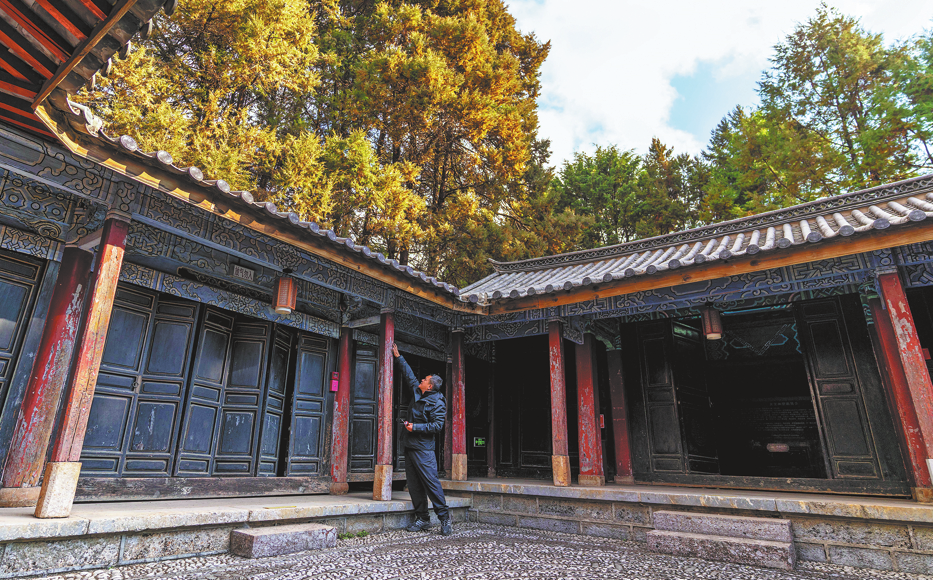
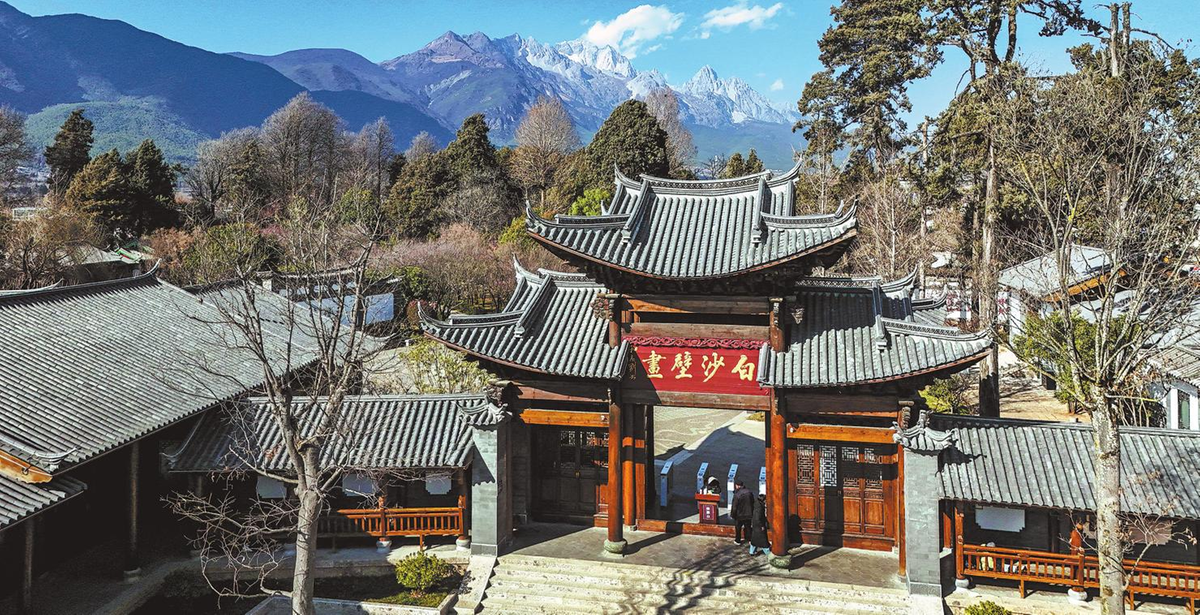
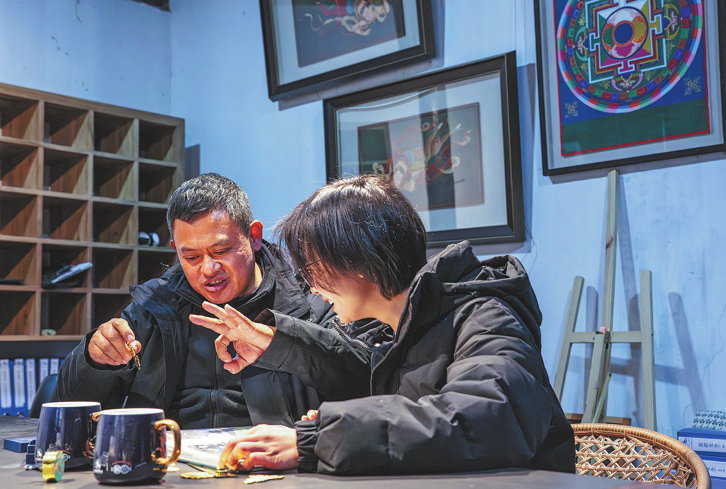
In the quiet hour before dawn, when Baisha ancient town still slumbers at the foot of Yulong Snow Mountain in Lijiang, Yunnan province, 57-year-old Yang Zhijian begins his daily work.
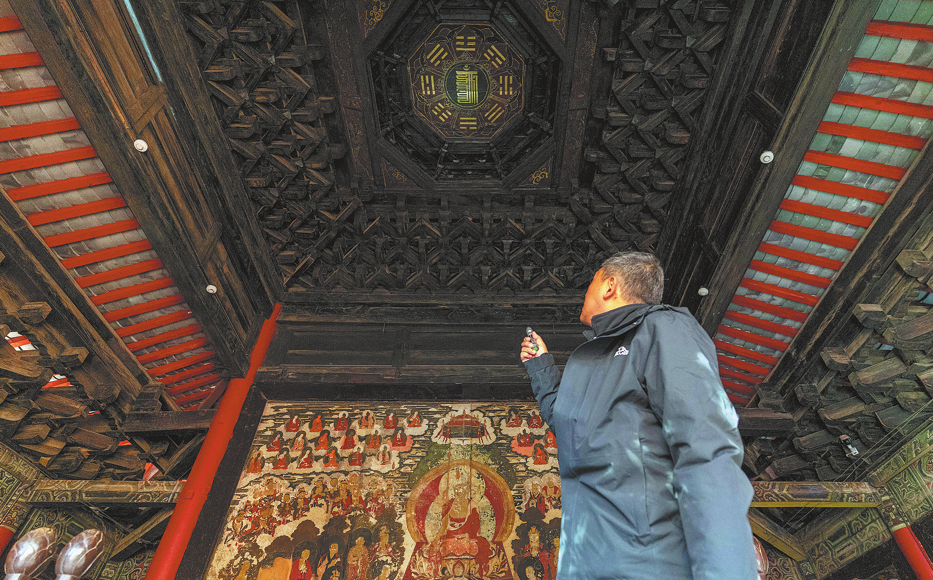
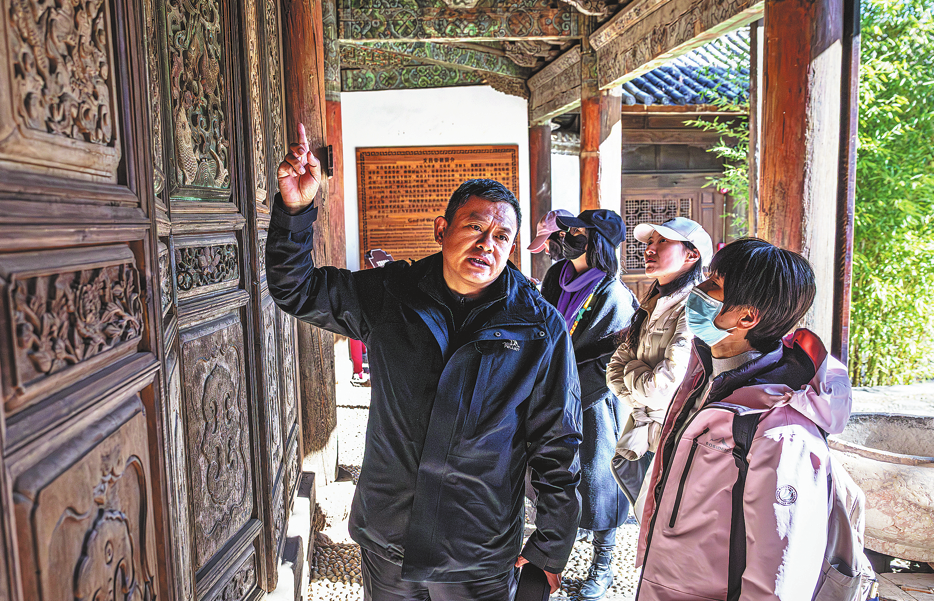
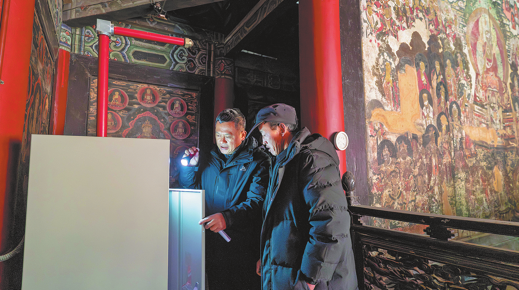
As the curator of the Baisha Mural Museum, his mornings are spent in a silent communion with history: checking the condition of centuries-old murals, recording the temperature and humidity inside temple halls, inspecting fire safety equipment, and walking through courtyards dotted with ancient architecture and timeworn trees.
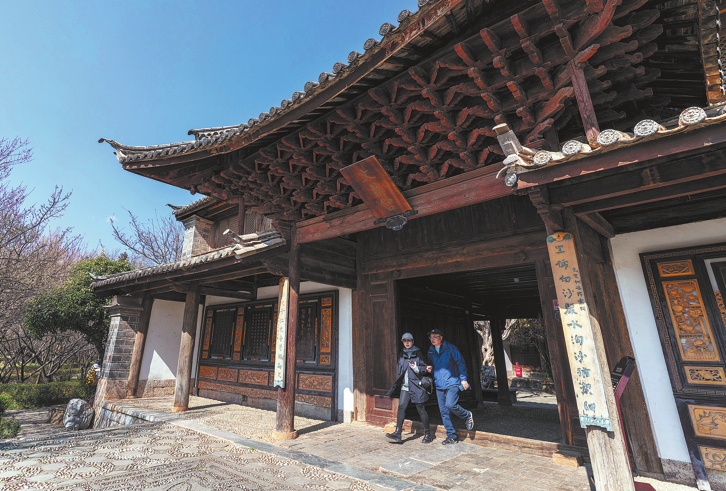
The museum, located in Baisha, known as the original settlement of the Naxi ethnic group in Lijiang, is home to a cluster of buildings in the Ming and Qing dynasties (1368-1911). These exquisite frescoes and ancient buildings stand as vivid testimony to the region's artistic sophistication and cultural diversity.
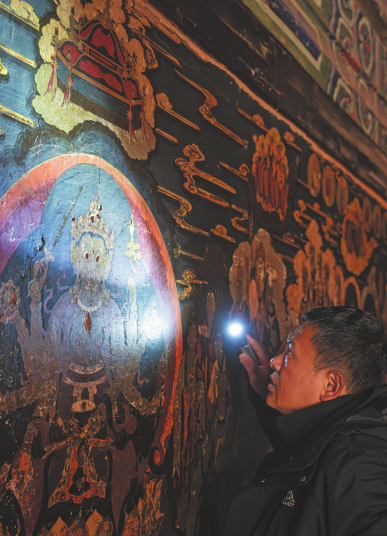
Painted across temple and palace walls, the murals depict religious stories and scenes from Taoism and Buddhism, showcasing a harmonious blend of artistic styles from the Naxi, Tibetan and Bai ethnic groups.
In ancient times, the town used to be the center of silk embroidery in Southwest China and a key stop along the ancient Tea and Horse Road, a significant trade route that once linked Yunnan to parts of India through Manipur.
"My hometown is Baisha, so I often came to see these murals as a child," Yang says.
After graduating from Southwest Minzu University in Chengdu, Sichuan province, in 1990, he dedicated his career to cultural heritage work. In 2007, he returned to Baisha to devote himself to the protection, management, and restoration of these irreplaceable artworks.
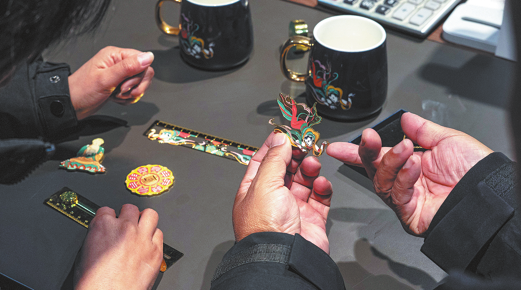
For Yang, preservation alone is not enough. His deeper mission is to make cultural heritage "come alive". He has organized exhibitions of Baisha murals in cities like Shanghai, overseen the compilation of art books, and promoted digital archiving as well as the development of creative cultural products inspired by the murals.
"We must not only protect them, but also allow mural art to enter people's daily lives in new forms," he says.
As dusk settles and the last visitors depart, Yang makes his final rounds. The setting sun filters through the leaves of old trees, casting a golden glow on the temple roofs and the vivid scenes depicted on the walls.
What weighs most on Yang's mind is completing the restoration of all murals in the ancient town before he retires.
"What I guard here is not just the murals," Yang says, adding that it is the history of how different ethnic groups met, interacted, and blended over centuries.






Today's Top News
- Xi congratulates Yoweri Museveni on re-election as president of Uganda
- Senior military officials under investigation: Defense Ministry
- Systematic approach sees return of clear waters to the Yangtze River
- IP protection for new fields to improve
- Draft rules define premade dishes in consumer interest
- Xi greets To Lam on election as Vietnam party leader