

Beijing pioneer transforms high-altitude healthcare










When Zhang Ning arrived in Lhasa in July 2024, he stepped into a healthcare system shaped as much by geography as by policy. At more than 3,600 meters above sea level, Xizang's thin air complicates everything from emergency response to sleep quality, while distance and terrain limit access to routine care. For many residents, advanced medical services have traditionally meant long journeys outside the region.
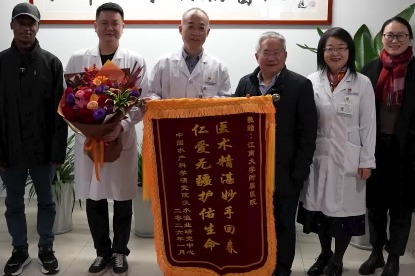
Zhang's posting to Lhasa People's Hospital is part of Beijing's group-based medical aid initiative, which pairs leading hospitals in east China with counterparts in Xizang. The aim is to raise medical standards, train local professionals, and strengthen hospital management.
Speaking about his time in Xizang, Zhang said the ultimate goal is to bring healthcare closer to the people by addressing immediate needs and empowering local talent to sustain progress in the long term. That balance between delivering results and building capacity has shaped how reforms have unfolded at the hospital.
Culture and trust
Zhang knew that the success of the reforms would only go as far as his staff had belief in him. He focused on building trust within the hospital by learning basic Tibetan phrases such as "Kukhamsang" (hello) and "Thukjeche" (thank you). These small gestures helped narrow the cultural distance between him and local staff.
Tenzin Yangdron, a Tibetan nurse at the hospital, said Zhang listens to staff and addresses problems personally rather than relying on directives alone. When delays arose during the installation of DR equipment, she recalled, he stepped in to help resolve the issue rather than leaving it to others. "Zhang is not only a leader but also a mentor," she said.
Training for future
Alongside clinical reforms, Zhang emphasized developing local medical talent that could carry the torch forward. One of the foundational changes Zhang ushered in was a mentorship and department pairing program linking 12 leading Beijing hospitals with Lhasa People's Hospital.
Under this model, local doctors work closely with experienced specialists from Beijing. A key example comes from the hospital's gastroenterology department, where a local physician became the hospital's first home-trained PhD under the mentorship of Liu Kuiliang from Beijing Friendship Hospital.
"This mentorship model is ultimately about self-sufficiency," Zhang said. "We want to equip local practitioners with the skills and confidence to lead, innovate, and deliver top-quality care for their communities."
Zhang has described this approach as a "hematopoiesis model", aimed at ensuring the hospital's development can continue after external support winds down.