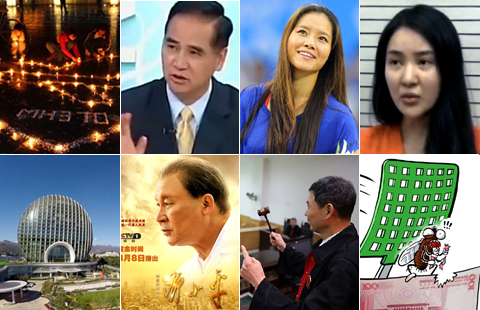
Many Chinese have seen hope in the major progress that has been made in internationalizing the issue in the past 10 days. The Beijing Declaration on Fighting Corruption, adopted during the Asia-Pacific Economic Cooperation Economic Leaders' Week in Beijing, reaffirmed the commitment to denying safe haven to those engaged in corruption, including through extradition, mutual legal assistance and the recovery of ill-gotten wealth. It also promises to strengthen information-sharing among APEC members and seek bilateral cooperation to fight corruption through the use of existing international legal instruments, such as the UN Convention Against Corruption.
In Beijing, US Secretary of State John Kerry pledged US support for the adoption of the declaration. He said the US is willing to work with China to carry out law enforcement cooperation in related fields, as long as there is evidence, and the US would not become a haven for corrupt elements.
On Sunday, the G20 leaders in Brisbane, Australia, adopted the 2015/16 anti-corruption action plan, which includes, among other things, international cooperation to hunt down corrupt people who exploit international borders to avoid prosecution.
Most Chinese would like to see the anti-corruption momentum gained under President Xi Jinping be sustained. They also hope the campaign will be reinforced by the latest agreements reached at the APEC and G20 meetings.
It would be a shame for advanced nations to become a notorious safe haven for corrupt officials while touting rule of law and their contempt for corruption. These nations must take strong actions and send a clear message to corrupt Chinese officials already hiding or planning to hide on their soil. They should cooperate more with China under bilateral and international agreements and conventions instead of being stuck with the differences in their legal systems.
For many Chinese, the US, Canada and Australia are clearly in the spotlight. The ball is in their court.
The author, based in Washington, is deputy editor of China Daily USA. chenweihua@chinadailyusa.com
 Considering money as the end is the tragedy

Copyright 1995 - . All rights reserved. The content (including but not limited to text, photo, multimedia information, etc) published in this site belongs to China Daily Information Co (CDIC). Without written authorization from CDIC, such content shall not be republished or used in any form. Note: Browsers with 1024*768 or higher resolution are suggested for this site.
License for publishing multimedia online 0108263 Registration Number: 130349