


Temples witness a transformation










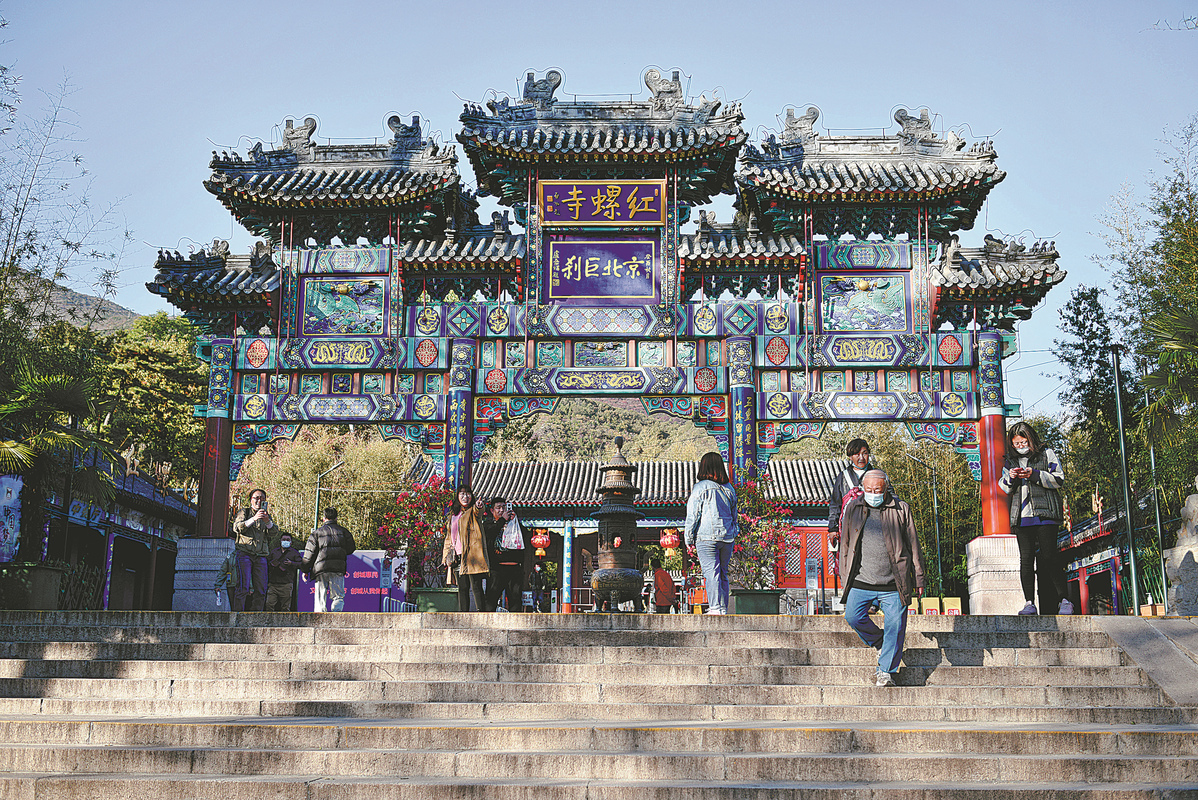
Hongluo Temple, located in the north of Huairou district, welcomes thousands of visitors every autumn with its beautiful ginkgo trees.
Ju said, "These temples functioned as parks, where the public could enjoy nature. Many of them also acted as amusement parks, staging fairs at certain times of the year. Some also had libraries where the public could read books, while others acted as makeshift hotels for visitors to the city."
Local residents' lives were closely involved with the temples, she added.
For instance, when children were ill, their parents might take them to a temple to be treated, as many monks had medical skills. When children reached school age, they sometimes went to temples for lessons, because many old-style private schools were housed in such venues.
"When a person failed to find a job in business or farming, they might become a temple monk, which was viewed as a good occupation. Even when people grew old and were homeless, they could spend their later years at a temple, where they were cared for," Ju said.
In present-day downtown Beijing, Guanyin (the Buddhist Goddess of Mercy) Temple, which no longer exists, acted as a small public square for people living in the nearby hutong. For a long time before the 1950s, it functioned as a nursing home for the elderly and provided accommodations for the homeless.
In the book Peking: Temples and City Life, author Susan Naquin, a scholar from the United States studying Chinese history and culture, uses the city's temples to analyze people's lives during the Ming and Qing dynasties.
She tells how religious establishments of all kinds were used for fairs, markets, charity work, tourism, politics and socializing.
Naquin shows that temples, by providing a place where diverse groups could gather, were homes to a surprising number of community-building and identity-defining activities.





