

Temples witness a transformation










Solutions discussed
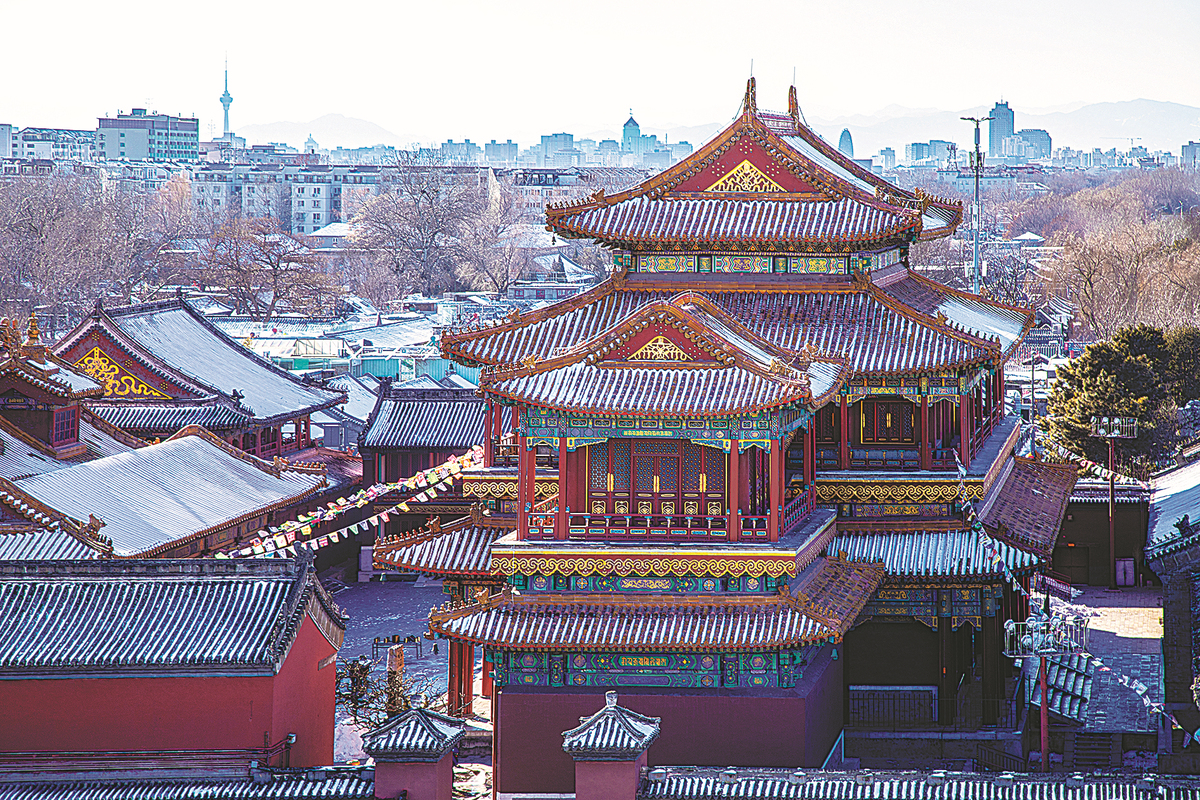
Nowadays, most temples in Beijing no longer function as religious venues. With an increasing number of people nationwide visiting the city in recent decades, some temples became places for locals to gather, while others were turned into small business stores selling daily goods for hutong residents.
However, the role played by temples as gathering places for such residents has gradually disappeared.
When people walk in a hutong, they usually feel hemmed in, but in recent years, the Beijing municipal government has introduced a series of measures aimed at restoring the atmosphere of the past.
Urban planning professionals, conservators and technicians have been invited to listen to hutong residents' needs and to discuss with them solutions for modern living and a better environment, as well as protection for ancient buildings.
For example, in Dongcheng district, Yuer hutong, which translates as "drizzle", used to be full of untidy yards and was home to numerous households.
In 2015, the authorities gave local residents a choice-they could either stay or leave.
Those who chose to leave were moved to new apartments out of the hutong and given financial subsidies. People who opted to stay were given a renovated yard with more living space.
For example, five families were living in one of the yards in Yuer hutong. Three of them chose to leave, while two families decided to stay. After renovation work, the yard was transformed into five one-bedroom apartments with modern facilities.
According to People's Daily, from 2015 to 2020, a total of 1,332 residents from 437 households left the hutong for modern communities, raising the per capita living space from less than 25 square meters to 110 sq m.
As people moved out, the space they vacated in the hutong was used for gardens, public halls, meeting rooms, or for cultural and entertainment activities. Repair work also started at some temples.
Hou Xiaolei, a professor at the Central Academy of Fine Arts' School of Architecture and planner for Tiantan sub-district in Beijing, said making the best use of temples after repairs was fully discussed.
In 2014, Hou's team started repairs at Qinghua Temple in Tiantan sub-district. Although it was built in the Ming and Qing dynasties, the front and central halls were still in good condition. The cornices, carved railings and tiles were also well preserved.
"However, inside the temple, there was an untidy yard, which was a sad sight," Hou said. "The repairs have now been mostly completed, and instruction on ancient architectural repairs is now being given at the building."