


Dialogue constructive way to rebalance trade: China Daily editorial









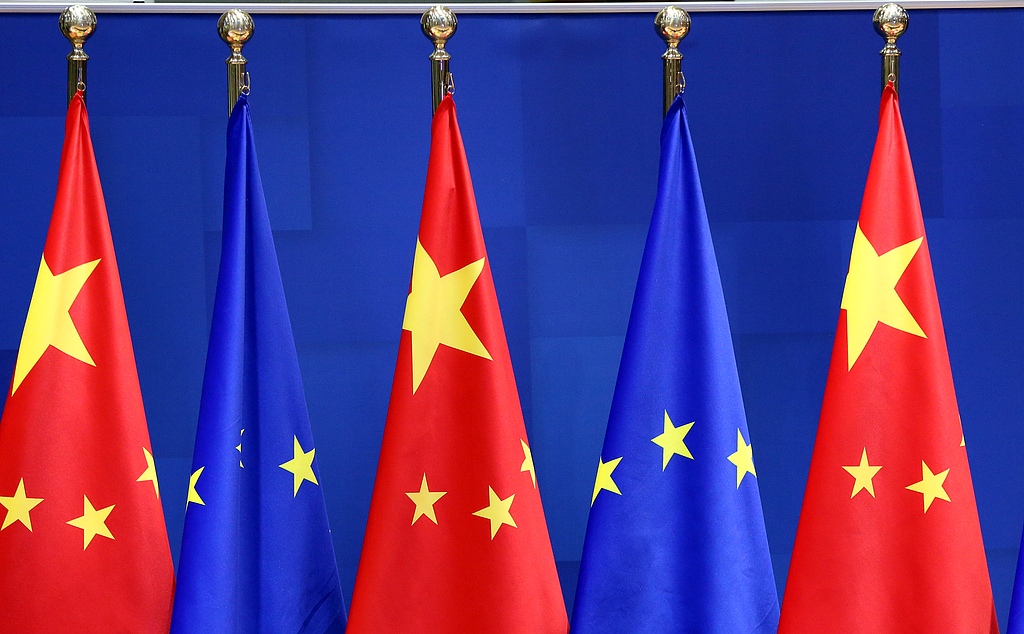
French President Emmanuel Macron's call for a cooperative economic framework between the European Union and China in a Financial Times op-ed article published on Tuesday should be viewed in light of his recent productive visit to China, and seen as an appeal for constructive dialogue and a rallying cry for joint actions to achieve the goal.
As Chinese Foreign Ministry spokesman Lin Jian said, deepening strategic communication and practical cooperation between China and the EU can lead to a more stable and prosperous global landscape, benefiting both regions and reinforcing multilateralism.
Although Macron noted that the current trade surplus of 300 billion euros ($352 billion) is in China's favor, he emphasized that the EU imposing tariffs and quotas on Chinese imports would be an "uncooperative answer" and could lead to a damaging trade dispute.
He outlined a vision of mutual cooperation, particularly in the realms of clean energy and services, advocating a collaborative framework that leverages the strengths of both economies. Acknowledging the complexity of the trade imbalance, Macron rightly suggested that the EU needs to focus on enhancing its competitiveness and innovation.
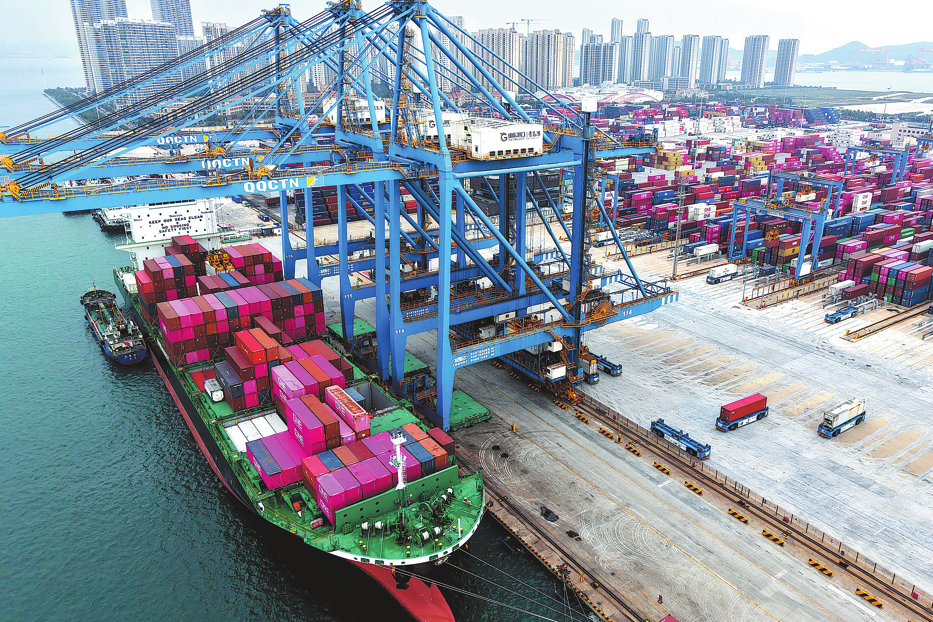
China and the EU remained each other's second-largest trading partners in the first 11 months of this year, with total trade reaching 5.37 trillion yuan ($748.4 billion), a 5.4 percent increase year-on-year. Experts have attributed China's export growth to its economy's resilience and investment in emerging sectors such as new energy, the digital economy and artificial intelligence.
In contrast, the EU's focus on economic "de-risking" has led to a lagging green transition, with insufficient investment in areas such as new energy, and it has become a major factor affecting its trade balance. It is unrealistic for the EU to seek to reduce its trade deficit with China while strictly restricting its high-tech exports to the country, such as advanced semiconductors and lithography machines, and hindering Chinese investment in strategic fields citing politicized justifications. Brussels should reflect how much of the EU's deficit is caused by its own policies.
Those who accuse China of flooding its products in other markets also ignore the fact that the country's trade balances are shaped by broader international market forces including supply-and-demand dynamics, the industrial division of labor and market competition. Measures such as unilateral tariffs are superficial remedies that risk exacerbating tensions while disrupting global industry and supply chains.
China and the EU have diverse economic structures, which require nuanced strategies that take long-term influences and sector-specific needs into account. A comprehensive and collaborative approach through dialogue based on trust and an equal footing, rather than punitive knee-jerk reactions, is the rational way to address trade imbalance.
China and the EU are not merely trade partners, but also strategic collaborators with shared interests in promoting global economic stability and sustainable development. Their economic structures are complementary, and their interests are intertwined. Any problem that hinders sustainable and healthy development of their economic and trade relations should be resolved through dialogue in the spirit of partnership.
China has recently issued licenses for the export of rare earths to Europe, underscoring its commitment to maintaining the stability of global supply chains. This move should not only alleviate concerns over potential disruptions, but also highlight China's willingness to engage constructively with its European partners.
At the recent annual Central Economic Work Conference, the central authorities pledged to build a robust domestic market and outlined consumption enhancement and urban-rural income growth plans. By promoting domestic consumption and developing its service economy, China aims to create a more balanced and sustainable growth model. This transition will not only benefit China, but also open up new avenues for European businesses to engage with the Chinese market.
China and the EU have a shared responsibility to foster a stable and mutually beneficial economic relationship. The path forward lies in open dialogue, strategic coordination and a commitment to shared prosperity, rather than rivalry or de-risking.