


Davos in an age of fracture









Davos has always liked to think of itself as a mountaintop monastery for globalization — a place where the world's arguments are briefly silenced by altitude, and where power, suitably dressed in wool coats and good intentions, might rediscover moderation. In 2026, that illusion has thinned. The snow is still immaculate, the panels still earnest, but the forum now feels less like a sanctuary than a crossroads where incompatible ideas pass one another without stopping.
The official theme, "A Spirit of Dialogue", reads less like an aspiration than a plea. Dialogue, after all, is no longer assumed; it must be defended. What Davos reveals this year is not a shared roadmap for the future but the shape of the fractures already widening beneath it. From a Chinese perspective, this matters not because Davos decides the world's fate — it never really has — but because it exposes which forces are working to stabilize the international system, and which are content to shake it for leverage.
The forum's choreography has changed. Behind closed doors, ministers and executives speak with a candor that borders on fatigue; on stage, they perform alignment for a global audience that has grown broader and more distracted. Livestreams multiply voices while thinning substance. Davos gathers more participants than ever, yet extracts less commitment from each. Cooperation has become a talking point rather than a premise.
This procedural version of dialogue suits a fragmented age. It allows disagreements to be aired without resolution, contradictions to coexist without synthesis. Initiatives like "Blue Davos", which elevates water and planetary restoration to the level of strategic concern, gesture toward long-term responsibility. But they unfold alongside tariff threats, sanctions, and security brinkmanship — short-term instruments that speak more loudly than any panel on sustainability.
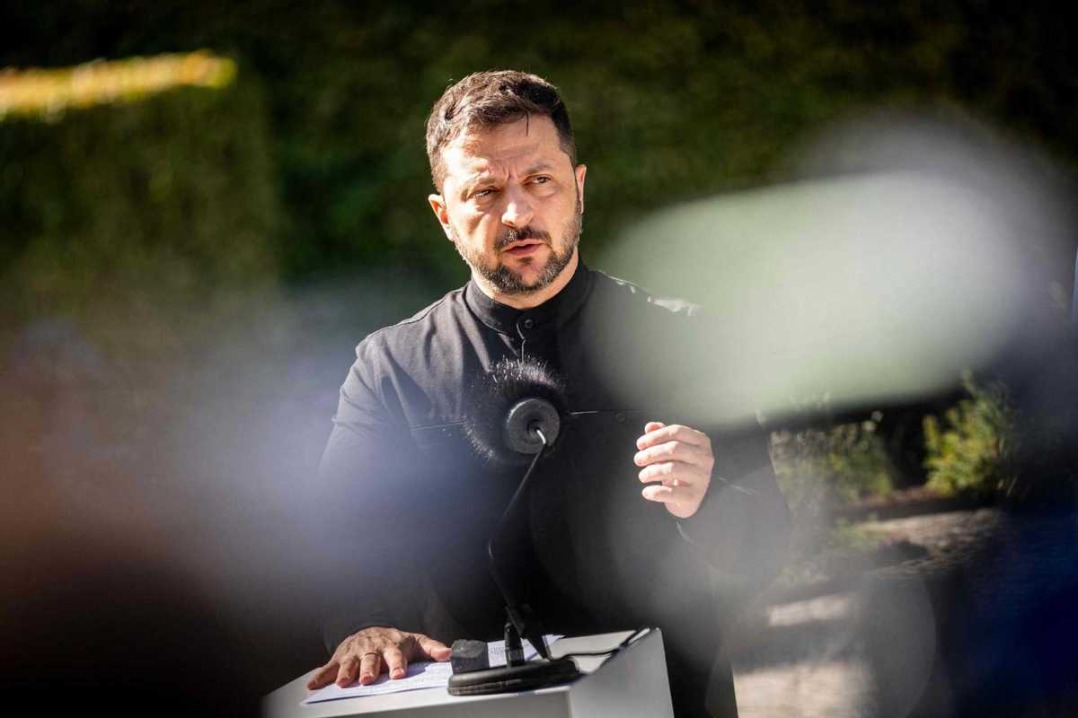
Against this backdrop, China's position remains consistent and clear. Vice-Premier He Lifeng spoke in the language Davos still recognizes: markets, rules, openness, mutual benefit. China's development, he argued, is not a threat but an opportunity; its growth is not exclusionary but shared. The emphasis on consultation and equality was not rhetorical decoration — it was the substance of the message.
What gave these words weight was context. China's economy, navigating domestic adjustment and external pressure, has demonstrated resilience rather than retreat. Its insistence on World Trade Organization principles was not nostalgia for a vanished order, but a reminder that predictability remains valuable precisely because it is being abandoned elsewhere. Since joining the WTO, He noted, China has not sought special treatment. The implication was understated but clear: stability is not weakness, and openness can be strategic.
In Davos terms, this was disciplined engagement. China did not challenge the forum's norms; it inhabited them. It did not demand concessions; it offered reassurance.
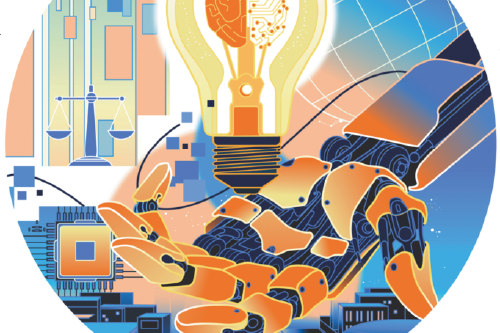
Beyond geopolitics, Davos 2026 revealed a sobering recalibration of risk. Geoeconomic confrontation topped the forum for the first time. Artificial intelligence discussions moved from creativity to control — from generative tools to "agentic" systems capable of restructuring entire industries. Quantum technologies promised precision and security even as governance lagged behind innovation.
Here, too, perspectives diverged. Some spoke of disruption as destiny; others of adaptation as responsibility. China's emphasis on skills, infrastructure, and long-term planning stood apart from the fevered race narratives elsewhere. The future of work, after all, is not merely a technical problem but a social one — a point often lost amid valuation charts and venture capital optimism.
Davos in 2026 does not pretend to resolve the world's arguments. Its relevance now lies elsewhere: in making contradictions visible, in forcing competing visions to share the same thin mountain air. For China, this visibility is not a liability but an opportunity. It clarifies where rules still matter, where cooperation is possible, and where confrontation is chosen.
The forum has become less a summit of solutions than a mirror of the moment. It reflects a world in which dialogue persists, but without illusion; where openness must be defended not by slogans, but by conduct. In that sense, Davos still matters — not because it delivers consensus, but because it reveals who is prepared to sustain it, and who is content to bargain it away.
Xu Ying is a Beijing-based commentator.
The views don't necessarily reflect those of China Daily.
If you have a specific expertise, or would like to share your thought about our stories, then send us your writings at opinion@chinadaily.com.cn, and comment@chinadaily.com.cn.