


Long-term, consistent comprehensive strategic Sino-UK partnership benefits both and world: China Daily editorial









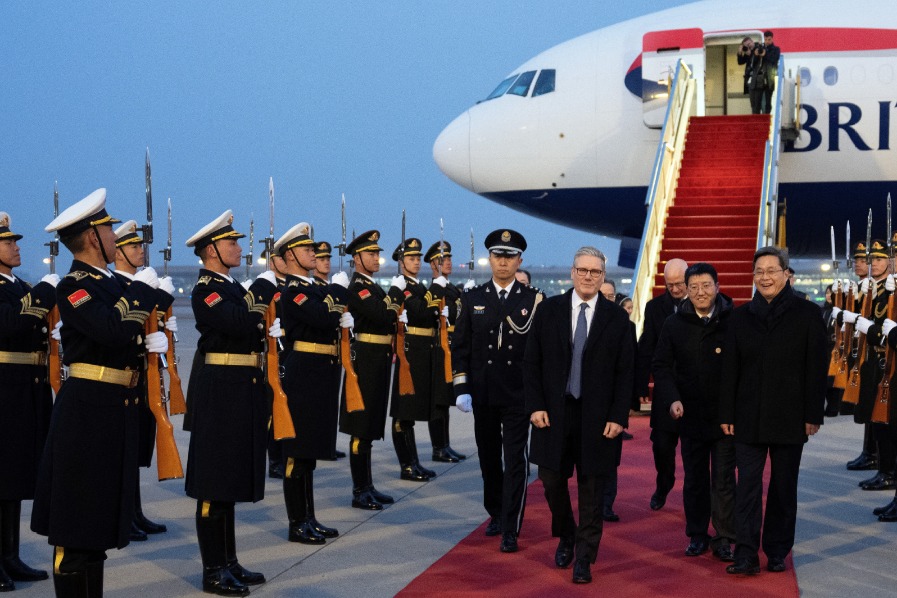
Reflecting a shift in how major countries assess stability, development and cooperation in a volatile world, the first visit to China by a British prime minister since 2018 carries significance beyond bilateral ties.
Underscoring that China has always adhered to the path of peaceful development, President Xi stressed in his meeting with United Kingdom Prime Minister Keir Starmer on Thursday that China will never pose a threat to other countries no matter how it grows and develops.
Sending a clear signal that dialogue and cooperation serve the fundamental interests of both countries, the two leaders agreed the two sides should develop a long-term consistent comprehensive strategic partnership. For the UK, this entails viewing China's development objectively in the first place. After several years of adjustment under so-called "de-risking" approaches, the UK, like some other European countries, now seems to recognize that artificially distancing itself from China is neither practical nor sustainable.
China is a reliable partner because of its openness, policy stability, long-term development potential and vast market. At a time when many European economies face mounting economic pressures, there is a strong impetus for them to strengthen practical cooperation with China, and the UK is no exception.
Xi called on the UK to expand the frontiers of cooperation with China in education, healthcare, finance and the service sector, and to strengthen joint research and industrial transformation in areas such as artificial intelligence, bioscience, new energy and low-carbon technologies. These are also the areas where the UK seeks new growth drivers and where China's vast market, complete industrial system and continuous opening-up offer tangible opportunities.
Thus, Starmer's visit, accompanied by dozens of business leaders as well as representatives from academia and culture, which followed the visits of several European leaders and senior officials to China over the past months, reflects the pragmatic reassessment of major country relations underway in some European countries.
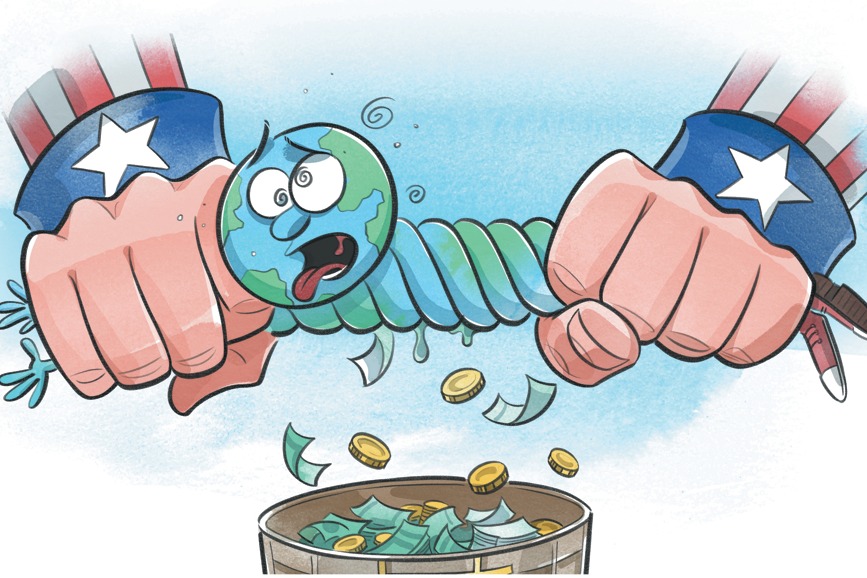
In recent years, the rise of unilateralism has become the major variable impacting Europe's strategic and diplomatic environment, disrupting global trade and squeezing the policy space of countries. Strengthening dialogue and exchanges with China has emerged as a viable and rational way for European countries to restore balance in their external relations.
What these visits highlight is China's role as a source of certainty, predictability and stability in a turbulent world. It is the world's second-largest economy's consistent support for multilateralism, economic globalization and the stability of global industry and supply chains that has gained its stabilizing role increasing recognition.
This recognition is grounded in hard facts. Despite a complex external environment, China's trade surplus toppled $1 trillion in the first 11 months of 2025, demonstrating the competitiveness of its manufacturing and the attraction of its market. Meanwhile, measures to expand market access in services, enhance foreign investment facilitation and promote high-quality development have reinforced confidence among international businesses and investors. Such certainty stands in contrast to the unpredictability that has unsettled global markets and partnerships elsewhere.
Increasingly, European countries are realizing that formulating China policy solely through the prism of the transatlantic alliance is neither realistic nor in their interests. Adopting a more independent, rational and pragmatic approach toward China is gradually becoming a mainstream understanding in the core policymaking circles of more and more countries.
In this light, strategic coordination between China and the UK, along with other major countries, on the world stage is of practical importance. Foreign Minister Wang Yi in a phone call with Emmanuel Bonne, diplomatic adviser to the French president, on Wednesday conveyed a similar message.
To that end, countries should handle their differences properly. The differences should not be allowed to define their relationship. What matters is adhering to mutual respect, engaging in candid dialogue and preventing differences from escalating into confrontation. Good things often come with difficulties. Despite facing complex challenges, responsible leaders must display the courage to forge ahead as long as the actions align with the fundamental interests of the country and its people.
Yet it must be pointed out that the engagement sought by other countries with China should not be driven by short-term, utilitarian considerations or because of temporary external pressure but their true commitment to stable relations.
If the UK and Europe more broadly show greater vision and pragmatism and take concrete actions to strengthen strategic coordination with China within the framework of multilateral platforms, this will be conducive to promoting a stable, balanced and just international order that produces tangible benefits for the world.