



YRD demonstration zone seeks to advance concerted institutional reform and innovation









Continued efforts will be made to advance institutional reform and concerted innovation during the 15th Five-Year Plan (2026-30) period at the demonstration zone for integrated ecological and green development in the Yangtze River Delta region, officials said during a government press conference on Thursday.
Low-carbon transformation of traditional industries will be underlined in the zone during the 15th Five-Year Plan period, exploring the establishment of green and low-carbon industrial clusters and building a carbon emission budgeting management system in key industries, said Gu Jun, director of the Shanghai Municipal Development and Reform Commission and head of the demonstration zone's executive committee.
New-generation information technology and green new materials should seek substantial development in the zone in the following few years. The zone will also actively plan for the development of artificial intelligence and future-oriented energies, Gu said.
It should be noted that a high-tech industrial development area in the demonstration zone was officially approved on Jan 23. The area will mainly focus on developing the three strategic emerging industries of digital industry, intelligent manufacturing, and green new materials — featuring companies' headquarters and green sci-tech innovation services.
According to Gu, major data center projects are expected to be put into use in the demonstration zone during the 15th Five-Year Plan period to support the transformation and innovation of industries. These will include Alibaba's intelligent computing base in the YRD, China Mobile's 5G data center for the YRD, and China Telecom's computing center in Wujiang, among others.
Made up of Qingpu district in southwest Shanghai, Wujiang district of Suzhou in southern Jiangsu province, and Jiashan county in northeast Zhejiang province, the demonstration zone was set up in 2019 to better facilitate the integrated development of the Yangtze River Delta region, which was elevated as a national strategy in November 2018.
Strong growth momentum has been seen at the zone since its inception — notably during the 14th Five-Year Plan (2021-25) period — registering a yearly nominal GDP growth rate of 7.3 percent. The zone's GDP amounted to 571.6 billion yuan ($82.3 billion) last year.
Up to 56.43 billion yuan of investment was directed to the construction of major projects in the zone last year, equating to 111.3 percent of the original plan.
Over the past five years, the zone accumulated a total of 161 institutional innovation measures, of which 61 have been replicated nationwide. Last year, the zone released nine of its latest institutional innovation attempts to the rest of the country and promoted another 15 innovative measures across the Yangtze River Delta region.
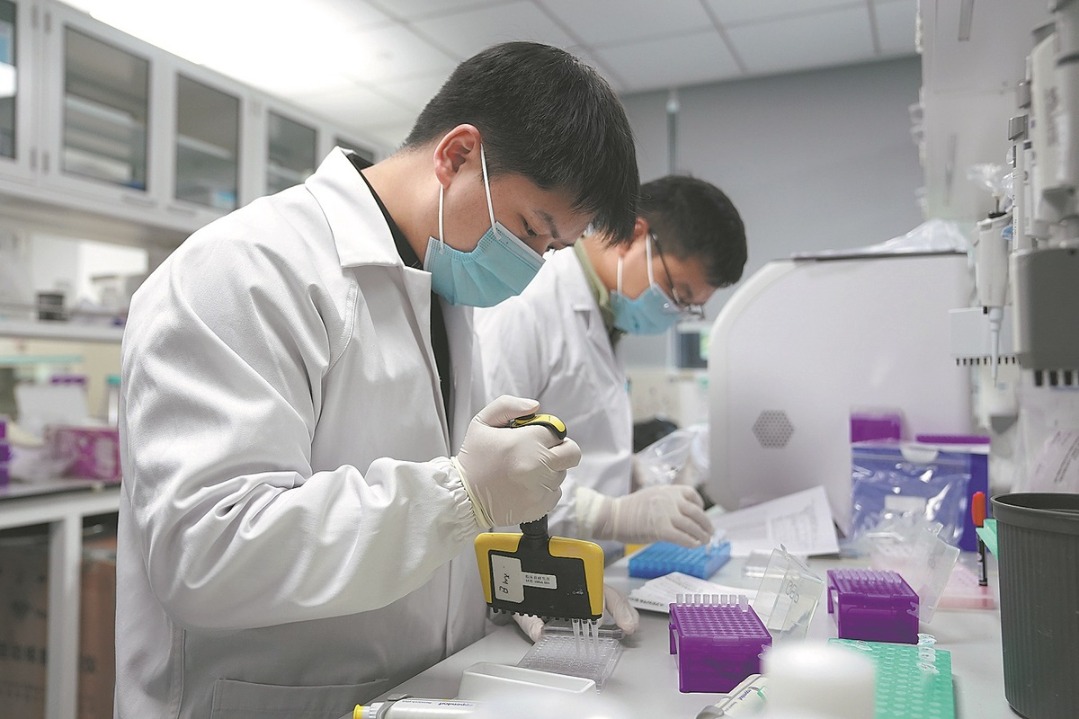
By the end of last year, the number of high-tech enterprises in the demonstration zone increased to 3,713 — 2.4 times the number that existed when the zone was founded. In the past three years, over half of the service contracts concluded at Xiangfu Laboratory's proof-of-concept center and pilot testing platform project in Jiashan served projects in Shanghai and Jiangsu, reflecting a deeper cross-regional integration between the demonstration zone's innovation chain and industrial chain, Gu said.
An investment fund was set up in the zone in October. With an initial scale of 500 million yuan, the fund mainly focuses on the investment in green and low-carbon development and technology innovation, Qu Wei, deputy head of Shanghai Municipal Commission of Science and Technology, said.



- YRD demonstration zone seeks to advance concerted institutional reform and innovation
- Chinese courts boost pretrial mediation, resolve 4.32 million disputes in 2025
- Video series aims to show the beauty of Hebei
- Explore a historical city teeming with transformation in Beautiful Tianjin
- Chinese court announces 1st-instance verdict for fraud gang in northern Myanmar
- China aligns green finance with global standards, boosting renewable leadership