


The new logic behind China's trade









For much of the past three decades, China's foreign trade story centered on familiar themes: low costs, massive scale and consistent expansion. In 2025, that narrative no longer portrayed the ground reality.
The latest trade data point to something more consequential. China is not merely trading more, but it is trading differently. Behind the steady headline growth lies a structural transformation that is reshaping China's role in global commerce, with implications that extend well beyond its borders.
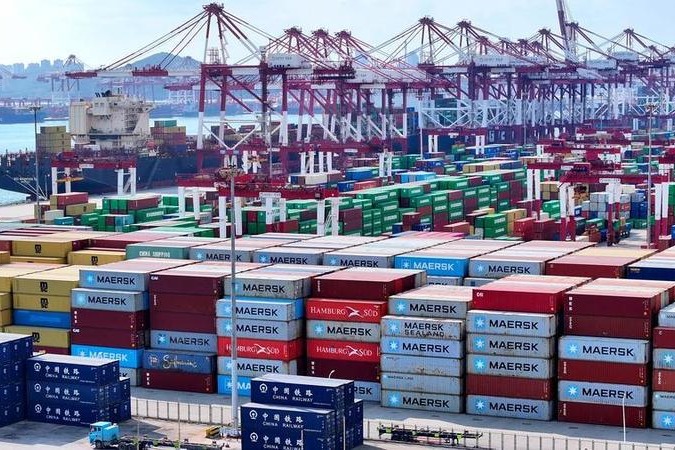
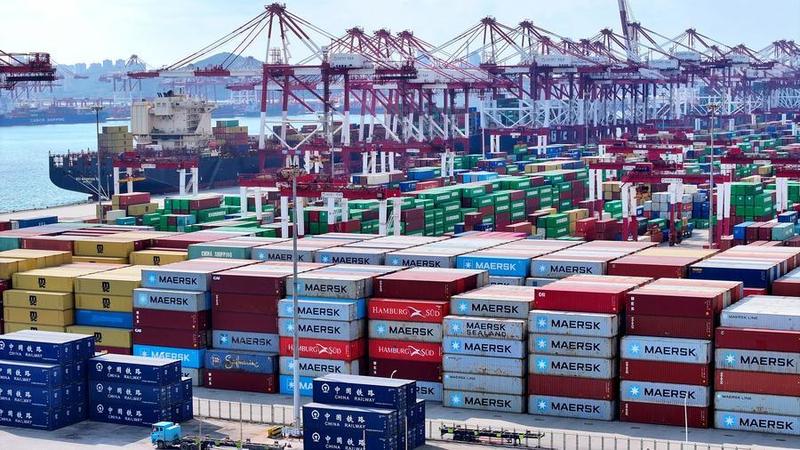
The latest GDP figures are quite telling. Despite a challenging international environment, China's economy expanded by 5 percent in 2025, with GDP reaching 140.19 trillion yuan ($20.15 trillion). Trade in goods exceeded 45 trillion yuan for the first time, rising 3.8 percent year-on-year and marking the ninth consecutive year of growth since 2017. China remained the world's largest trader in goods and, for the 17th year running, its second-largest import market.
Yet the most important signal from these figures is not the scale, but the direction. China's foreign trade is shedding its dependence on costs and volumes and moving toward competitiveness driven by technological innovation and green transformation. That shift is already visible in what China sells, where it sells, and who is doing the selling.
The clearest change lies in what China now exports. In 2025, high-tech products emerged as the main driver of export growth. Their total value reached 5.25 trillion yuan, growing more than twice as fast as overall exports and contributing a disproportionate share of incremental growth. This is not just an upgrade in the product mix; it reflects a deeper reconfiguration of China's manufacturing capabilities.
A symbolic milestone came when China recorded a trade surplus in industrial robots for the first time. For a country long dependent on imported high-end manufacturing equipment, this marked a historic transition — from technology follower to independent supplier, and increasingly, to global exporter.
The same pattern is evident in green industries. Exports of electric vehicles, lithium-ion batteries, photovoltaic products and wind power equipment continued to surge in 2025, offering cost-effective solutions for the global energy transition. These products are no longer niche or policy-driven experiments; they have become commercially competitive on a global scale.
As one veteran auto salesperson put it, selling new energy vehicles used to require storytelling. Now it requires inventory. The change reflects not only rising global demand, but also China's ability to innovate rapidly across an integrated industrial ecosystem — from upstream materials to downstream manufacturing.
China's trade transformation is also geographical. In 2025, China traded with 249 countries and regions, and more than 190 recorded growth in bilateral trade. The share of China's top 10 trading partners declined, a sign that market diversification is no longer a slogan but a measurable trend.
Trade with Belt and Road partner countries exceeded 23 trillion yuan and accounted for more than half of China's total foreign trade. ASEAN further consolidated its position as China's largest trading partner, while trade with Africa grew at one of the fastest rates globally. The broader trade footprint has made China's external sector more resilient to shocks, reducing exposure to single-market volatility and political risk.
Three factors help explain why China's trade has remained steady in turbulent times. First, its manufacturing and supply chains remain uniquely complete. China's dominance in manufacturing intermediates gives it a central position in global production networks. When international supply chains are disrupted, this completeness enables rapid adjustment and continued delivery.
Second, new trade models have gained momentum. Cross-border e-commerce and market procurement trade expanded strongly in 2025, bringing more Chinese products directly to overseas consumers. Cross-border e-commerce trade reached 2.75 trillion yuan, growing rapidly over the past five years.
Third, policy support has been both targeted and pragmatic. Measures such as export transformation subsidies, tax incentives and improved tax refund policies have helped firms manage costs and adapt to shifting global conditions.
China's trade transformation now enters a new phase. The launch of island-wide special customs operations in China's Hainan Free Trade Port marks a shift toward deeper institutional opening. Hainan is serving as a testing ground for reforms that may later be scaled nationally.
For global readers, the message is clear. China's trade story is no longer defined by sheer volume alone. It is increasingly shaped by technology, sustainability and institutional reform — trends that will influence global supply chains, climate goals and economic governance alike.
Lyu Yue is the deputy dean of the School of International Trade and Economics, University of International Business and Economics; and Zhang Yihua is a postdoctoral researcher at the School of International Trade and Economics, University of International Business and Economics.
The views don't necessarily reflect those of China Daily.
If you have a specific expertise, or would like to share your thought about our stories, then send us your writings at opinion@chinadaily.com.cn, and comment@chinadaily.com.cn.